City. Kingdom. Empire.
Letters, inscriptions, cities and objects reveal the institutions of ancient Assyria—and the limits of royal claims.
Ancient Assyria →Assyria through the ages
Discover a civilisation through its evidence—and living communities through their own histories, languages and places.
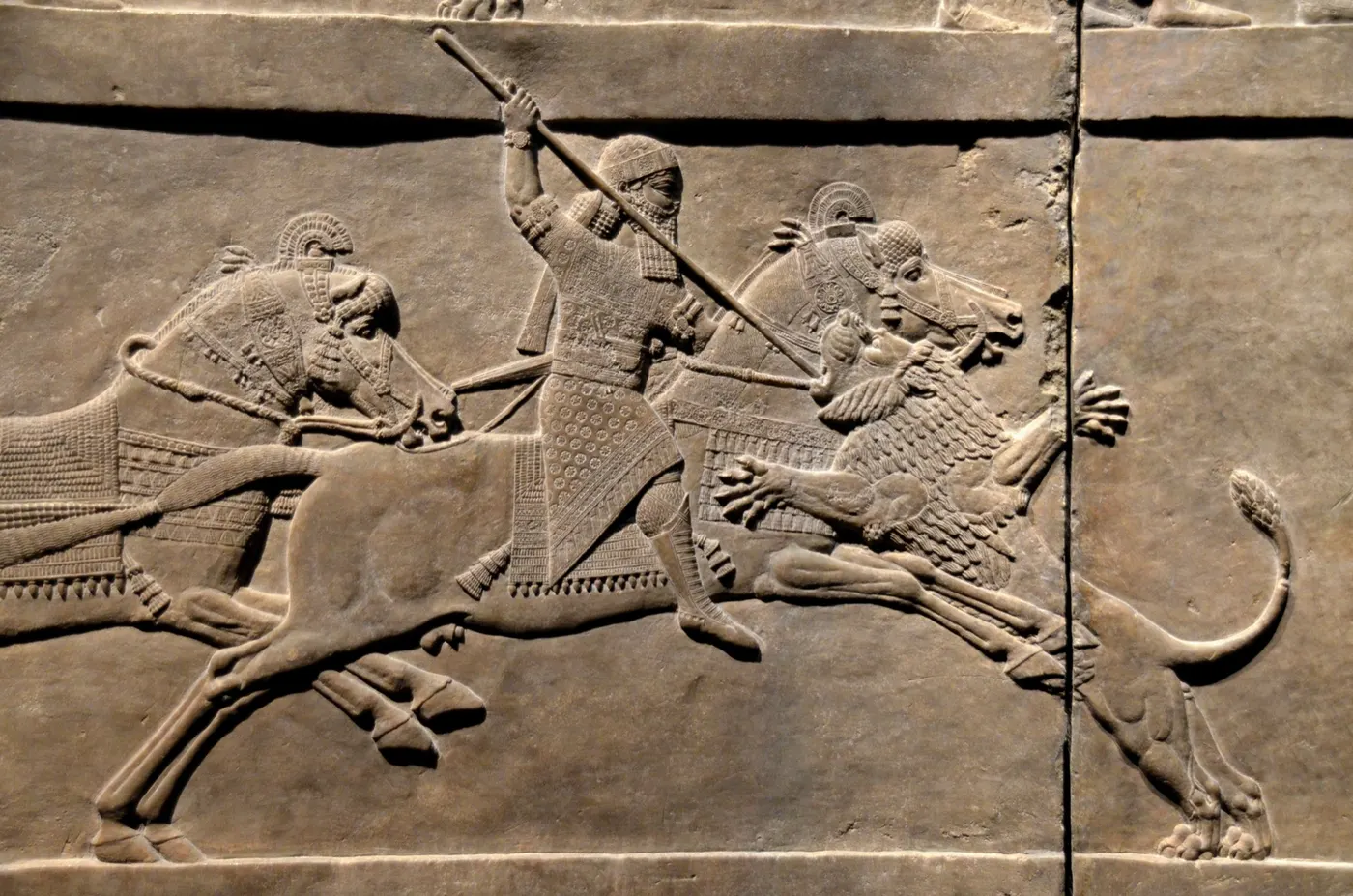
Choose your way in
Connected, not interchangeable
Ancient states, language change and present identity need different kinds of evidence.
Letters, inscriptions, cities and objects reveal the institutions of ancient Assyria—and the limits of royal claims.
Ancient Assyria →Explore churches, languages, local histories and cultural life without forcing everyone into one identity label.
Modern Assyrians →New · 6 October 2026
Meet royal women, learned advisers, Syriac scholars and modern cultural figures. Twelve new profiles connect individual lives with letters, books, places and institutions.
Ancient court · Flourished around 800 BCE
Sammu-ramat is unusually visible in contemporary Assyrian inscriptions; later traditions associated her with the legendary Semiramis.
Read life and sources →Syriac scholarship · Early 4th century–373
Ephrem made poetry and sacred song enduring vehicles for Christian teaching in Syriac.
Read life and sources →Modern cultural life · c. 1868–1930
An educator from Diyarbakir whose poetry and newspapers connected Syriac literary culture with modern Assyrian public life.
Read life and sources →Words with a history
383 distinct catalogue records; 53 individually reference-checked entries. No unsupported popularity rankings.
Documented later personal use
Aššur: the name of the god, city and land; no simple literal translation is established here.
Read the sources →Historical personal name
A Syriac form of Greek George; the Greek formation refers to a farmer.
Read the sources →Historical personal name
Sunday; related to the Aramaic/Syriac formation ḥad bšabbā.
Read the sources →Historical personal name
The pure one (Aramaic Naqiʾa); Zakūtu is the Akkadian equivalent.
Read the sources →Documented later personal use
No secure literal translation is asserted; historical and legendary identities must be separated.
Read the sources →Historical personal name
Twin; the Aramaic epithet behind Thomas.
Read the sources →Places & belonging
Six towns and villages connect architecture, language, manuscripts and dated community histories.
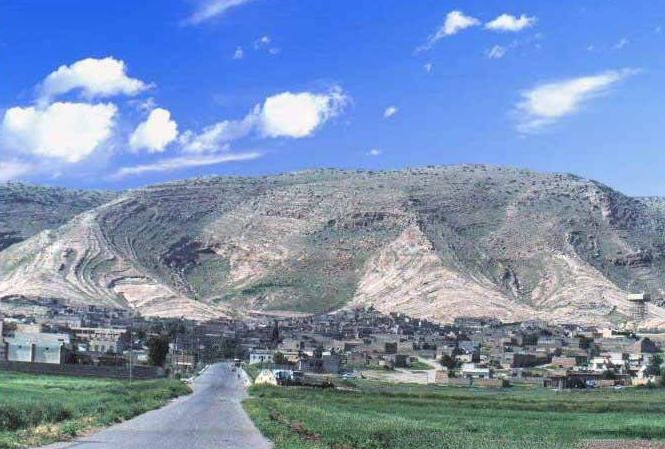
Nineveh Plains · Iraq
A historic town north of Mosul, with a rich Syriac literary heritage and an old centre below the mountains.
Local history & sources →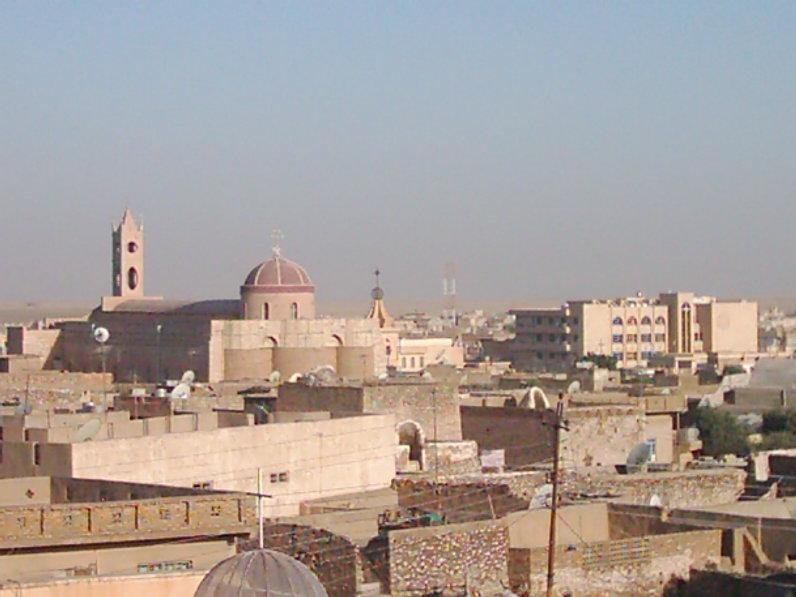
Nineveh Plains · Iraq
A major centre of Syriac Christian life on the Nineveh Plains, southeast of Mosul.
Local history & sources →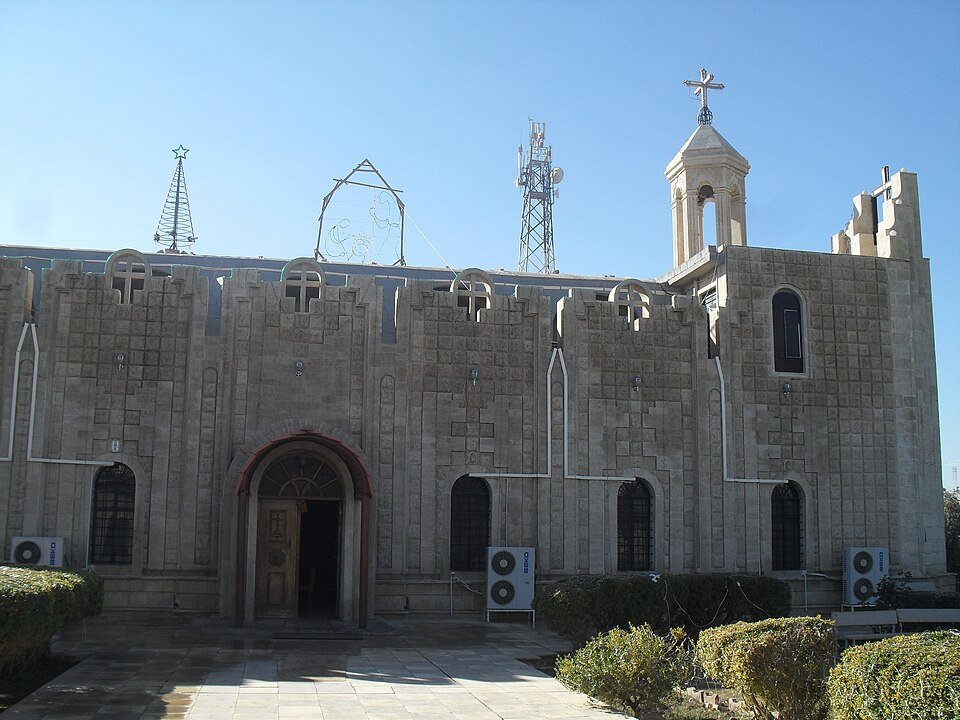
Nineveh Plains · Iraq
A town east of Mosul whose church heritage connects Syriac Orthodox and Syriac Catholic histories.
Local history & sources →Nineveh Plains · Iraq
A historic settlement between Bakhdida and Bartella, known for its market and Christian landmarks.
Local history & sources →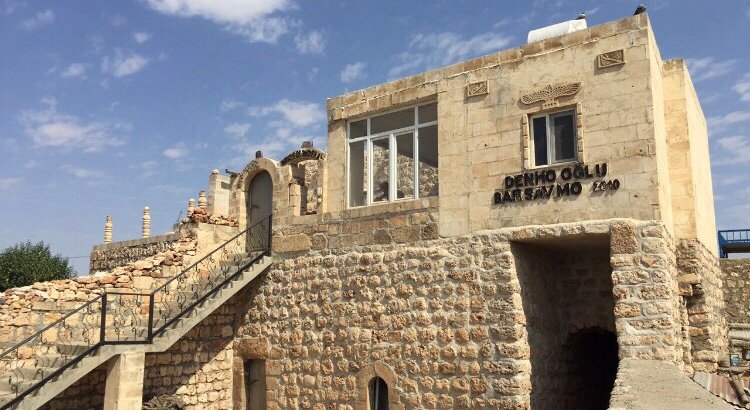
Tur Abdin · Türkiye
A village in Tur Abdin with outstanding examples of Syriac church architecture.
Local history & sources →Beytüşşebap, Şırnak · Türkiye
A village in the mountains of Şırnak, also known by its official name Kovankaya.
Local history & sources →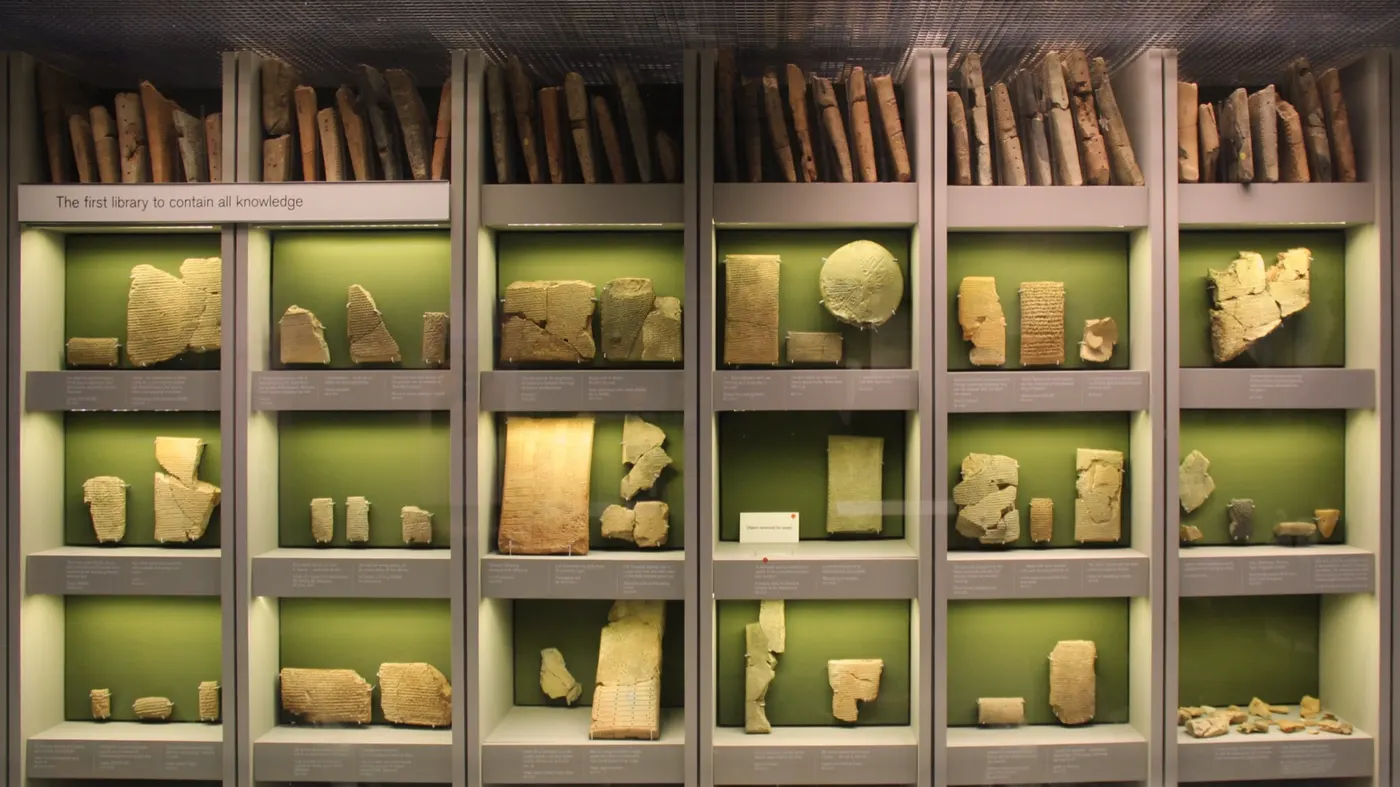
An object opens a world
Tablets from Nineveh preserve literature, medicine, ritual and scholarly work. Their collection histories tell us how the ancient court gathered and used knowledge.
Read the tablet story →Heritage in the present tense
Classical Syriac, Sureth/NENA and Surayt/Turoyo are not interchangeable courses.
Buildings & institutionsArchitecture, manuscripts and religious use, with foundation traditions clearly labelled.
Living cultureMusic, dance, print and community institutions connect places and generations.
A publication that shows its work
Across the homeland & diaspora
Selected dated reports—not a continuously monitored live feed. Latest listed source date: 2026-10-12.
Culture ·
Brussels, Belgium · city-level reference
Read briefing →Culture ·
Midyat (Medyad), Türkiye · town-level reference
Read briefing →Culture ·
Denair, California, United States · town-level reference
Read briefing →Reports in place
A map connects each briefing to an approximate location. Historical overlays are reference areas, not modern political borders.
Explore the news map ↗Find upcoming community events →A date opens a story
Documented anniversaries, with the date evidence kept in view.
Today uses Europe/London time. Historical dates follow their cited source; early calendars are not silently converted.
Selected date:
Sourced anniversaries for this date
No anniversary is documented for this date in our collection. Here are the next three.
The UN Security Council adopted resolution 2199, addressing terrorist financing and the illicit trade in cultural property from Iraq and Syria. The measure connected the protection of archaeological collections with the wider response to conflict.
This is the date of the Security Council action, not a date for every destruction or theft of an Iraqi artefact.
Dated 12 February 2015; the Council adopted resolution 2199 and required measures against the trade in unlawfully removed cultural property from Iraq and Syria.
During his visit to Iraq, Pope Francis prayed for war victims in Mosul’s Church Square. His address discussed displacement, the loss of Christian communities and the importance of rebuilding relationships among the city’s residents.
The published address identifies Hosh al-Bieaa in Mosul and Sunday 7 March 2021; it discusses displaced Christian families and renewal.
The Riksdag approved a motion calling for Swedish recognition of the 1915 genocide affecting Armenians, Assyrians/Syriacs/Chaldeans and Pontic Greeks. The parliamentary record identifies both the adopted decision and its date.
The entry describes a parliamentary vote. It does not treat that vote as proof of a later Swedish government policy or merge the named communities into one identity.
The official decision record gives 11 March 2010 and says parliament urged the government to recognize the genocide of the named communities.
Armenia’s National Assembly adopted a declaration condemning the genocide of Greeks and Assyrians carried out by Ottoman Turkey. The legislature’s published text provides a direct record of the declaration and its adoption date.
This anniversary concerns the adoption of a declaration in 2015, not a precise day for the earlier genocide.
The official declaration gives adoption date 24.03.2015 and explicitly condemns the genocide of Greeks and Assyrians by Ottoman Turkey.
The Security Council unanimously adopted resolution 2347 on cultural heritage in armed conflict. Its response to destruction and trafficking placed endangered archaeological sites, religious buildings and collections within an international protection framework.
This is a wider international heritage milestone relevant to Assyrian sites, not a resolution exclusively about Assyrians.
The resolution record states that the Council adopted it on 24 March 2017 at its 7907th meeting; it concerns destruction and trafficking of cultural heritage.
The official meeting report records unanimous adoption and describes the heritage-protection scope.
UNESCO launched Unite4Heritage at Baghdad University, inviting young people to oppose the destruction and pillage of cultural heritage. The campaign responded to attacks on Iraqi collections and sites, including Nimrud and Mosul Museum.
The first-party launch announcement is dated Saturday 28 March 2015 and identifies Baghdad University, the campaign and the destruction of Iraqi heritage.
Jacob of Edessa died after returning to Tell Ada to collect his books and students. His work in grammar, biblical revision and translation connected Syriac learning with Greek scholarship and influenced later generations of writers.
The historical date is reproduced as given by the specialist biography; it is not silently converted to a proleptic Gregorian date. His birth remains approximate.
The specialist biography places his return to the bishopric in 708 and explicitly gives his death as 5 June at Tell Ada; it describes his scholarly work.
Pope John Paul II and Patriarch Ignatius Zakka I Iwas issued a joint declaration in Rome. They affirmed shared Christological faith and discussed practical cooperation while acknowledging obstacles to full communion between their churches.
The Syriac Orthodox Church and the Assyrian Church of the East are distinct churches. The declaration is not a church merger or a statement assigning ethnic identity to their members.
The primary declaration concludes 'Rome, 23 June 1984' and sets out shared faith, cooperation and remaining limits to full communion.
Toma Audo, bishop of Urmia and Salamas, was killed during the First World War persecutions. His work included a Syriac lexicon, a Neo-Aramaic grammar and translations that remain important to the history of language scholarship.
The date is for Audo’s death, not a single date for all First World War violence in Urmia or the wider region.
The biography explicitly gives 27 July 1918 for his assassination and lists his lexicon, Neo-Aramaic grammar and translations.
The British Museum dates Hormuzd Rassam’s death to 16 September 1910. Born in Mosul, he worked at Nineveh, Nimrud, Ashur and other sites. His career is inseparable from both Assyrian archaeology and the history of collecting under empire.
Excavation, export and museum ownership are different historical questions; this anniversary does not treat imperial collecting as uncomplicated rescue.
The curator-maintained record gives life dates 1826–16 September 1910 and documents his excavations at Nineveh, Nimrud, Assur and other places.
The museum identifies Rassam as an Assyrian Christian born in Mosul and contextualizes his work alongside Layard and the collection’s history.
Pope Paul VI and the Syriac Orthodox Patriarch Ignatius Jacoub III concluded their meeting with a common declaration. They described shared faith, encouraged further study and appealed for peace, justice and religious freedom.
This concerns relations between two churches, not a merger or a universal statement about the ethnicity of Syriac Orthodox Christians.
The primary declaration is explicitly dated Wednesday 27 October 1971 and addresses theological dialogue, peace, justice and religious freedom.
The exhibition I am Ashurbanipal: king of the world, king of Assyria opened in London. Its focus on Nineveh, royal imagery and learned collections offers a modern reception-history route into the evidence for the Neo-Assyrian empire.
This is a modern exhibition anniversary, not the date of Ashurbanipal’s birth, accession or death. Its public title reflects royal ideology, not a neutral historical ranking.
The museum’s exhibition archive gives the run as 8 November 2018–24 February 2019 and describes its Assyrian subject.
The museum again confirms the exhibition dates and connects the exhibition with an introduction to ancient Assyria.
Pope John Paul II and Mar Dinkha IV signed a common Christological declaration at Saint Peter’s. The document affirmed shared faith and established a joint theological dialogue, while explicitly acknowledging that full ecclesial communion had not yet been restored.
A doctrinal declaration and dialogue process should not be described as the merger of the churches.
The signed primary document states 11 November 1994, names John Paul II and Mar Dinkha IV, establishes a Mixed Committee and describes remaining limits to full communion.
George Smith read the flood narrative from the Epic of Gilgamesh to the Society of Biblical Archaeology. His presentation brought a text recovered from Nineveh to wider public attention and became a landmark in the modern study of cuneiform literature.
The lecture is a nineteenth-century event. It does not date the ancient composition, establish the flood narrative as an eyewitness account or make the Babylonian epic exclusively Assyrian.
The institutional archaeology resource explicitly dates Smith’s public reading of the flood story to 3 December 1872.
The museum identifies the Flood Tablet and records its association with George Smith; this supports the artefact context, not the lecture’s day.
Without JavaScript, this selection is the dated 12 October 2026 edition. The collection is selective, not a complete calendar; uncertain ancient dates are not assigned a day.
Browse every sourced anniversary →Learn & contribute
Short readings, quizzes and printable classroom activities.
Community archivePrepare a family or place memory; public intake awaits verified publisher details.
Language varietiesRecording standards and a collection reserved for permissioned, reviewed contributions.
Evidence before certainty
Royal inscriptions are royal claims. A dictionary word is not proof of a personal name. A census category is not a universal identity count.
Assyrian History uses AI-assisted drafting and reference checks; it does not invent independent specialist reviewers or institutional partnerships.
24 published articles · 12 additional figures · 12 rulers · 12 historical place profiles.