Nineveh Plains · Iraq
Alqosh
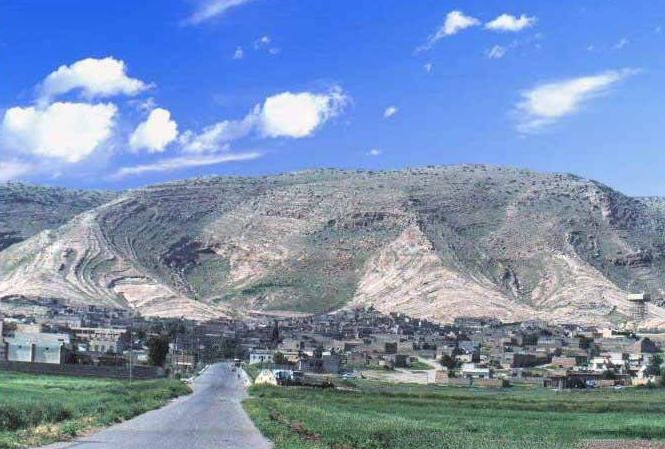
A historic town north of Mosul, with a rich Syriac literary heritage and an old centre below the mountains.
Modern name: Alqosh
Also written: Alqōsh · Alqush · ܐܠܩܘܫ
History & community
Alqosh connects the history of the Church of the East with the Chaldean Catholic tradition. Its churches, nearby monasteries and manuscript collections make it an important place for the study of Christian Mesopotamia.
Mar Mikha church stands in the old town, close to Mar Giwargis. The wider heritage landscape includes Rabban Hormizd monastery and the monastery of Our Lady of the Seeds. The shrine traditionally associated with the prophet Nahum also preserves the memory of Jewish pilgrimage.
A town of scribes and households
Alqosh is a town, not merely the name of a monastery. Alessandro Mengozzi’s Syriac encyclopedia entry describes a local economy that included farming, animal husbandry, weaving and cloth dyeing. Those activities place literary production within the ordinary work of a settlement, rather than imagining manuscript culture as something detached from everyday life. The account is a historical reference, not a current economic survey.
The School of Alqosh developed from the sixteenth century. Israel of Alqosh is identified as its founder, and its writers composed Classical Syriac liturgical poetry as well as works in vernacular Sureth. This distinction helps explain why a collection can contain different language layers even when the works share a Syriac script.
Two monasteries, different settings
Rabban Hormizd stands above the town in a mountainside landscape. Columbia’s field documentation describes a church-centred complex with partly rock-cut spaces and nearby hermits’ caves. Its position looks across the Nineveh Plain. The traditional seventh-century foundation and the surviving architectural phases should not be treated as the same date.
Our Lady of the Seeds is a separate monastery closer to Alqosh. A reader researching a photograph, manuscript or family recollection should establish which institution is meant rather than using the two names interchangeably.
Nahum’s shrine and Jewish memory
The shrine traditionally associated with Nahum preserves another part of the town’s religious landscape. ASOR’s heritage assessment describes a pilgrimage site documented from at least the twelfth century, including a synagogue, courtyard and subsidiary spaces. Its June 2020 addendum records restoration progress.
A longstanding pilgrimage tradition is evidence for the history of devotion and local Jewish heritage. It does not by itself establish that the biblical prophet was buried at this exact place. That distinction is retained in the landmark label.
Language
The local Alqosh variety belongs to North-Eastern Neo-Aramaic. Cambridge’s dialect database provides a detailed grammatical record. Classical Syriac is a distinct literary and liturgical tradition.
Related news
No village-specific briefings are in this edition yet. Browse community news →
Sources & further reading
- Syriaca.org Gazetteer — Alqosh (names and coordinates) ↗
- Mesopotamia Heritage — Mar Mikha church ↗
- Cambridge — Alqosh dialect ↗
Reference compilation substantively expanded and sources checked: 4 October 2026. No independent specialist review or current population survey is claimed.