Ancient city
Kalhu / Nimrud
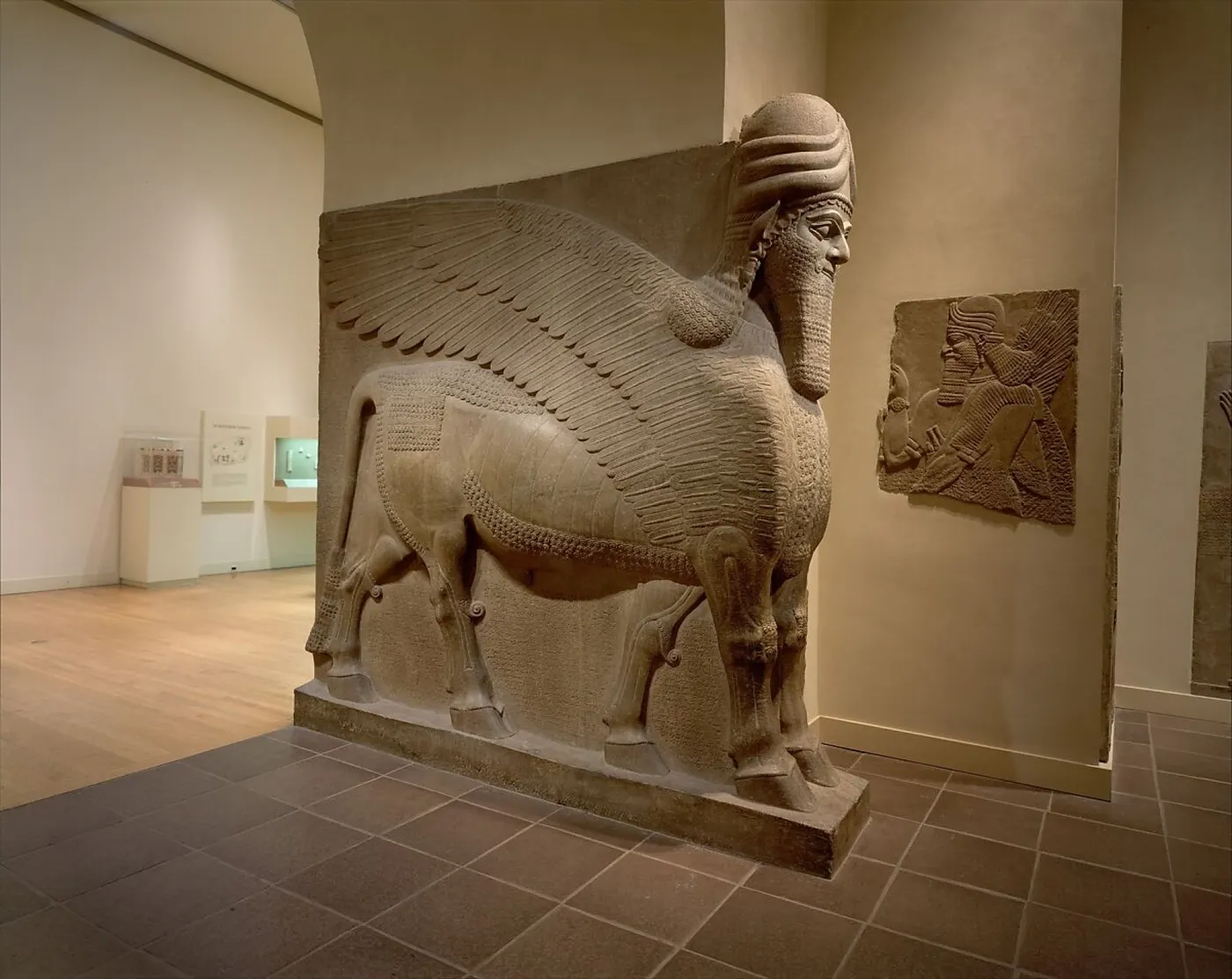
The royal city created by Ashurnasirpal II, renowned for palaces, reliefs, ivories and colossal gateway figures.
- Other names
- Kalḫu; Calah; Nimrud
- Present-day location
- Nineveh Governorate, Iraq
- Reference coordinate
- 36.099, 43.329
Ancient and historical geography
Ashurnasirpal II shifted the royal court to Kalhu in the ninth century BCE. The city remained a major administrative and military centre under later kings even when the principal residence moved.
The place today
The mound called Nimrud lies south of Mosul in present-day Iraq. It suffered deliberate destruction by ISIS in 2015; Iraqi and international teams continue documentation and conservation.
Layers of history
Ancient Kalhu became the main royal residence under Ashurnasirpal II in the ninth century BCE. The city was older, but the king’s programme transformed it with the Northwest Palace, temples, walls and a citadel designed to concentrate court, ritual and administration. Later rulers added palaces, arsenals and storerooms, so Kalhu remained a major imperial centre after the primary residence moved elsewhere.
People, institutions and daily life
Reliefs, ivories, metal vessels, administrative tablets and royal tombs reveal connections across the empire and beyond. Fort Shalmaneser housed military and institutional activity on a huge scale. The famous banquet inscription celebrates the city’s inauguration through royal numbers that cannot be checked as a modern census. Domestic districts remain less fully known than elite buildings, leaving ordinary urban experience comparatively underrepresented.
Archaeology and open questions
British, Iraqi and international excavations worked at Nimrud across different political eras and recording standards. ISIS deliberately damaged monuments and buildings in 2015, but the site was not erased: archives, earlier documentation, surviving structures and Iraqi conservation teams support recovery. Reconstructing the site requires distinguishing original stone, ancient reuse, twentieth-century restoration and post-conflict intervention.