Substantively expanded and references checked: 4 October 2026 · no independent specialist review claimed.
Neo-Assyrian ruler
Ashurnasirpal II
The king who made Kalhu a spectacular royal capital and established the courtly and military language of early Neo-Assyrian power.
- Approximate reign
- 883–859 BCE
- Family / dynasty
- Adaside line
Dated turning points
- 883 BCE
- Conventionally dated beginning of the reign.
- 882 BCE
- The king personally served as the annual limmu (eponym).
- 879 BCE
- The British Museum dates the Kurkh Stela commemorating his campaign to this year.
- 859 BCE
- End of the reign; succeeded by his son Shalmaneser III.
Accession and first full regnal year are stated separately where relevant. A BCE label can straddle portions of two Julian years.
Read the chronology against the evidence
Dates in Assyrian history can refer to an accession, a full regnal year or an eponym year. The limmu system named each year after an official. Connecting an inscription to an eponym list is one way historians reconstruct chronology, but the resulting BCE label still depends on calendrical conventions.
Kalhu’s transformation was a major building and administrative programme, not a palace isolated from the city. The inauguration banquet’s exact date is discussed differently in scholarship: older accounts often use 879, while another proposal places it around 864. This profile does not turn the traditional label into an uncontested completion date.
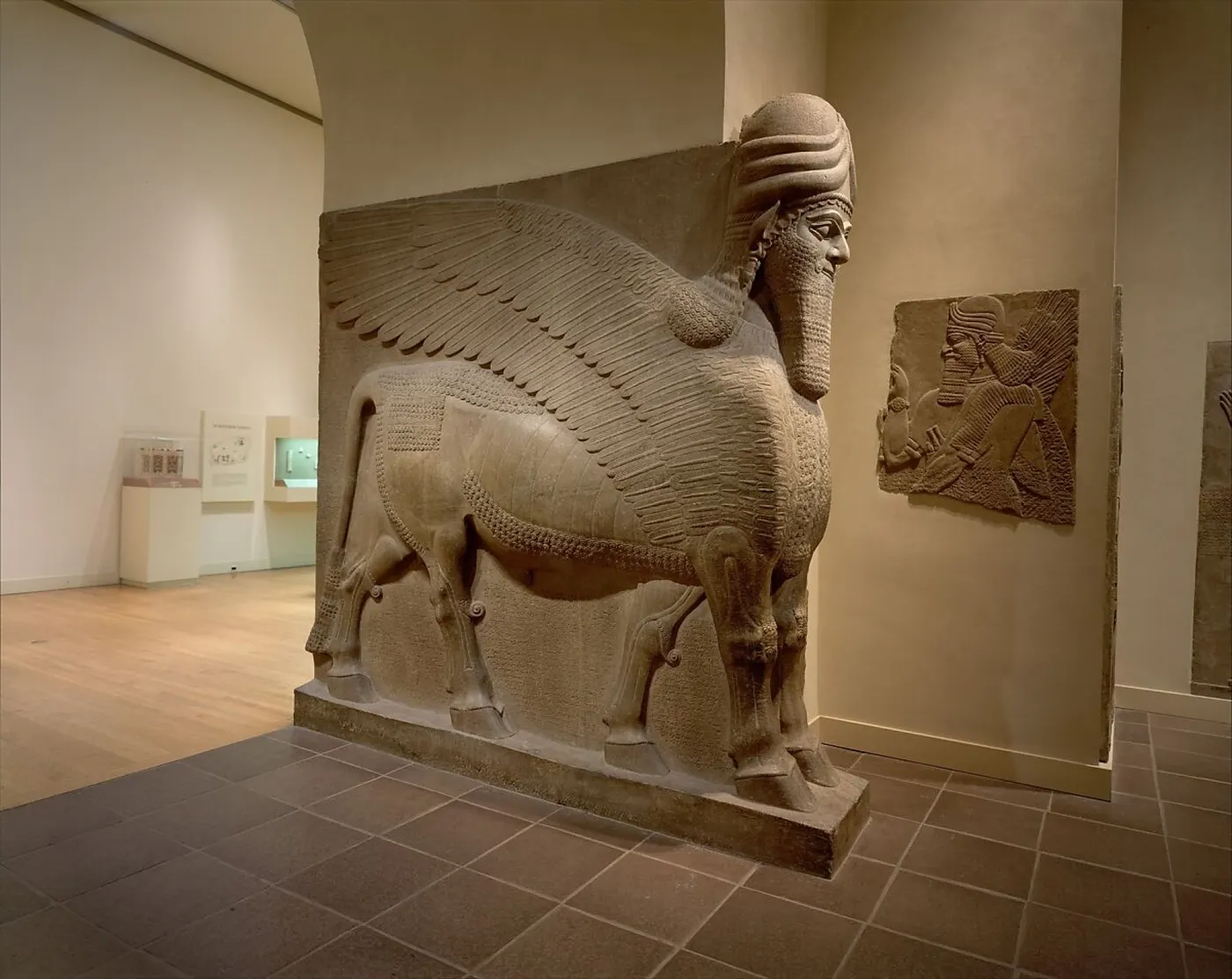
The winged bull shown here comes from the Northwest Palace and is appropriate to the building programme, but it is not a portrait of the ruler. An identified royal image can be compared through the British Museum’s Kurkh Stela record. Catalogue identification and permission to reproduce a photograph are separate questions.
Oracc — Ashurnasirpal II biography ↗
British Museum — Kurkh Stela, BM 118883 ↗Identified object reference; reproduction permission is not inferred.
Major events
- Consolidated Assyrian control in the north and west
- Received tribute from Levantine polities
- Held a vast inauguration celebration at Kalhu
Building and royal display
Created the Northwest Palace and monumental programme at Kalhu, decorating reception rooms with narrative reliefs and protective figures.
Historical significance
His capital and inscriptions show how architecture, ritual, resettlement and carefully staged violence worked together in imperial rule.
The reign in context
Ashurnasirpal II consolidated gains made by his father and grandfather and turned the renewed Assyrian state into a more imposing regional power. Annual campaigning reinforced control along the Tigris, in the upper Euphrates region and toward the Levant. Deportation, tribute and the installation of loyal officials helped translate battlefield success into resources for the court.
Rule beyond the headline
His transformation of Kalhu was a political project as much as a building programme. The Northwest Palace, temples, gardens and a vast inauguration banquet brought administrators, envoys and dependent rulers into a designed landscape of authority. Reliefs paired sacred ritual, military conquest and abundant nature. The city remained an administrative centre long after later kings moved the main residence elsewhere.
Evidence and interpretation
Ashurnasirpal’s inscriptions describe exemplary punishments in graphic language. Those passages document royal ideology and real coercive practices, but they are not transparent reports of every campaign. Monumental texts selected episodes that would intimidate rivals and impress elites. Archaeology at Nimrud supplies a different record: room functions, objects, burials, workshops and later alterations reveal a working city beyond the king’s self-portrait.