In brief
The essential points
- Modern Assyrians belong to several East and West Syriac churches, as well as other denominations or no church.
- Classical Syriac links liturgy and literature across institutions, while spoken Neo-Aramaic varieties follow different linguistic histories.
- A church name can overlap with ethnic identity, but it cannot tell an editor how an individual identifies.
What “Syriac Christianity” describes
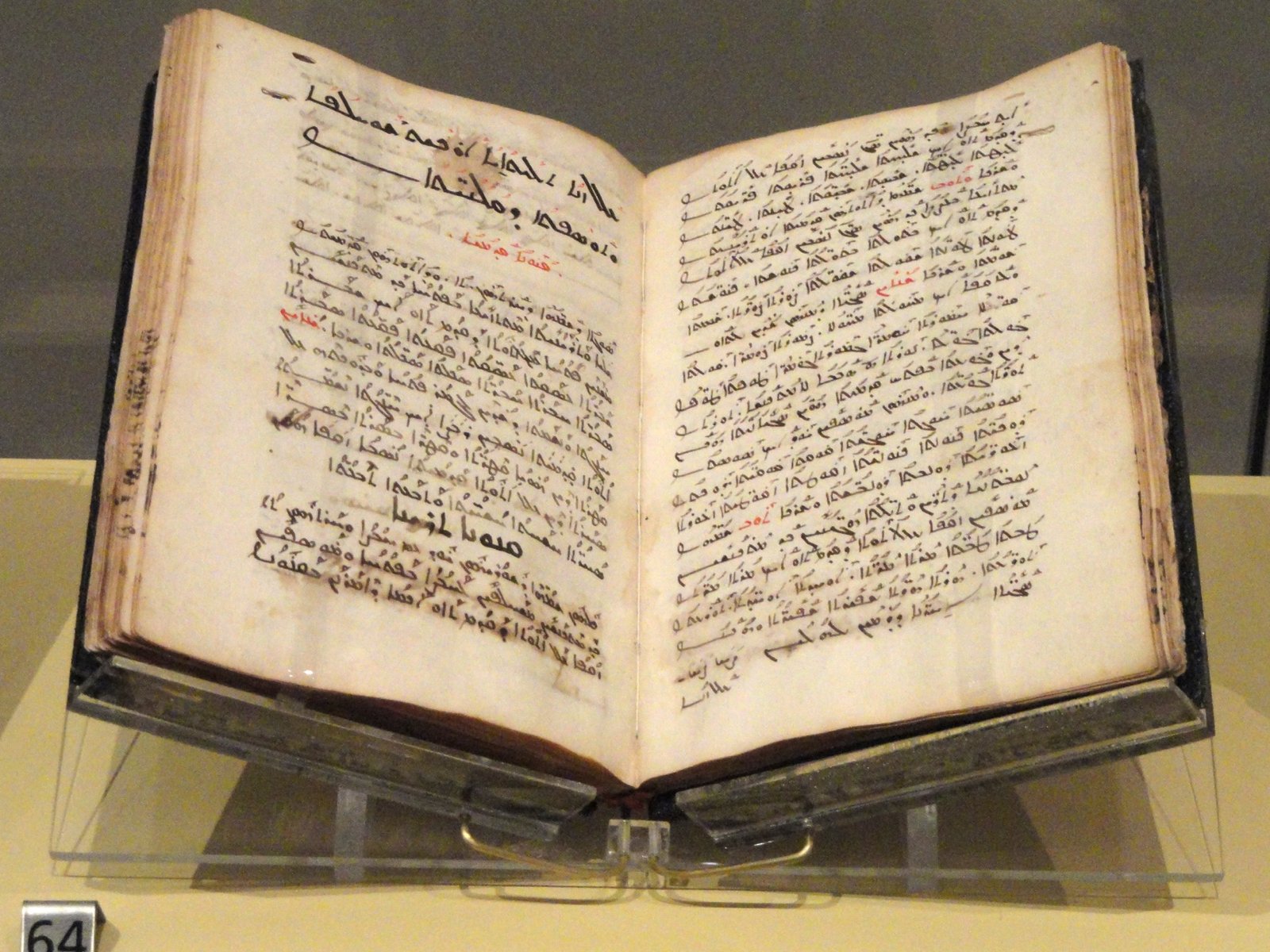
“Syriac Christianity” is a scholarly umbrella for Christian traditions shaped by the Syriac language and related liturgical, literary and institutional histories. It includes communities that developed east and west of the Roman-Persian frontier and later spread from the Middle East to India and global diasporas. The term describes a connected field, not one centralised church.[1][2]
Modern Assyrians may belong to the Assyrian Church of the East, Ancient Church of the East, Chaldean Catholic Church, Syriac Orthodox Church, Syriac Catholic Church, Protestant churches or other communities. Some are secular. Lists of churches therefore explain institutions, worship and social history; they must not become an ethnic membership test.[2][3]
East Syriac and West Syriac traditions
East Syriac traditions developed especially within the Church of the East and churches that later entered communion with Rome. West Syriac traditions are associated particularly with the Syriac Orthodox and Syriac Catholic churches. They have different liturgies, musical systems, calendars and institutional histories while sharing Classical Syriac heritage and centuries of interaction.[1][4]
“Eastern” and “Western” are liturgical-historical labels, not political alignments or measures of authenticity. Churches changed under Persian, Roman, Islamic, Ottoman and modern states. Jurisdictions expanded, contracted and moved; bishops and monasteries negotiated with rulers and local communities. Any diagram of branches is a guide to institutional succession rather than a complete map of people.[1][2]
The Church of the East family
The Church of the East developed within the Sasanian Empire and built networks stretching across Asia. In the modern period, disputed successions, violence, migration and reform produced the Assyrian Church of the East and Ancient Church of the East as separate institutions. Their members do not all hold one political view, dialect or relationship to other Syriac churches.[2][1]
Older European writing commonly called the tradition “Nestorian.” That label reduces a complex theological and institutional history to a contested name. The 1994 Common Christological Declaration between the Catholic Church and Assyrian Church of the East showed substantial agreement in how each tradition understood Christ, and it rejected caricatures inherited from older polemic.[5][1]
Catholic and Syriac Orthodox institutions
The Chaldean Catholic Church emerged through successive unions, rival patriarchal lines and later consolidation, not one clean split on a single date. “Chaldean” is its institutional name and a distinct ethnic identity for many people. It is inaccurate to reduce the term to denomination against the stated identity of members.[4][6]
The Syriac Orthodox Church has deep roots in West Syriac monastic and liturgical life, including Tur Abdin. The Syriac Catholic Church entered communion with Rome through its own historical process. Members may identify as Assyrian, Syriac/Suryoyo, Aramean, Chaldean, Arab or in other ways. Editorial neutrality begins by recording that diversity accurately.[1][7]
Classical Syriac, Neo-Aramaic and worship
Classical Syriac remains a major language of scripture, hymn, prayer and theological learning. It is related to, but not identical with, modern vernaculars such as North-Eastern Neo-Aramaic and Surayt/Turoyo. A service may combine Classical Syriac with Arabic, Kurdish, Turkish, Persian, English, Swedish or another language depending on place and congregation.[8][9]
Liturgy can preserve pronunciation, poetry and collective memory even where everyday vernacular transmission has weakened. It can also create barriers when worshippers do not understand the language. Translation, choirs, schools and digital resources respond in different ways. No single balance between heritage language and local language represents every parish.[10][7]
Missions, schools, printing and institutional change
Nineteenth-century Catholic, Protestant and other missions introduced presses, schools, new confessional competition and foreign connections. Local clergy, teachers, writers and families adopted, redirected or resisted those projects. Missions did not create the communities they encountered, but they helped reshape institutional boundaries and public identities.[11][6]
War and displacement moved patriarchates, seminaries and congregations. In diaspora, churches often provide welfare, youth programmes, language classes and social space in addition to worship. That importance should not hide secular cultural organisations or people alienated from institutions. Community life is larger than church life even where the two are deeply connected.[3][7]
Why church membership does not determine ethnicity
Church records can document baptism, marriage, clergy and jurisdiction; they cannot by themselves settle an ethnic theory. Families sometimes contain several preferred names across generations. A census, political organisation or parish may use a composite category for practical reasons without proving that every member interprets it identically.[7][3]
The responsible rule is simple: use a person’s stated identity, preserve the terminology of a historical source when analysing it and explain institutional names precisely. Do not infer ethnicity from rite, surname, dialect or a church building. That approach does not avoid history; it distinguishes evidence about institutions from authority over living people.[7][2]
Evidence trail
Sources and further reading
- Anthony O’Mahony. Syriac Christianity in the Modern Middle East. The Cambridge History of Christianity, 2006.
- Aaron Michael Butts. Assyrian Christians. A Companion to Assyria, Wiley-Blackwell, 2017.
- Alda Benjamen. Assyrians in Modern Iraq: Negotiating Political and Cultural Space. Cambridge University Press, 2022.
- Catholic Near East Welfare Association. The Chaldean Catholic Church. Eastern Christian Churches.
- Pope John Paul II and Mar Dinkha IV. Common Christological Declaration between the Catholic Church and the Assyrian Church of the East. The Holy See, 1994.
- John Joseph. The Modern Assyrians of the Middle East: Encounters with Western Christian Missions, Archaeologists, and Colonial Powers. Brill, 2000.
A modernist account whose arguments should be read alongside community-centred and newer scholarship.
- Naures Atto. Hostages in the Homeland, Orphans in the Diaspora: Identity Discourses among the Assyrian/Syriac Elites in the European Diaspora. Leiden University Press, 2011.
- Holger Gzella. A Cultural History of Aramaic: From the Beginnings to the Advent of Islam. Brill, 2015.
- Geoffrey Khan and project team. North-Eastern Neo-Aramaic Database Project. University of Cambridge.
Documented audio and linguistic data for North-Eastern Neo-Aramaic varieties.
- Šlomo Surayt project. Surayt Aramaic Online Course. Erasmus+ language project.
- Adam H. Becker. Revival and Awakening: American Evangelical Missionaries in Iran and the Origins of Assyrian Nationalism. University of Chicago Press, 2015.
Emphasises missions, education, print and modern national formation in Iran.