In brief
The essential points
- Assyrian is a present ethnonym used across church boundaries as well as the name of an ancient people and state.
- Chaldean and Syriac can be ecclesiastical terms and living ethnic identities; reducing either to “only a church label” misrepresents many people.
- Aramean is a modern self-identification for some communities and an ancient historical term; Aramaic speech alone does not mechanically determine ancestry.
Why one word can carry several histories
Assyrian, Chaldean, Syriac and Aramean can each refer to more than one thing. Depending on context, a word may name an ancient polity, a modern ethnicity, a church, a language, a literary tradition or a census category. Meanings have changed across Akkadian, Greek, Latin, Syriac, Arabic, Persian, Ottoman Turkish and modern European languages. A definition that works for a church document may fail on a census form or in a family conversation.[1][2]
The safest editorial rule is contextual respect. Use a person’s stated identity. Preserve the terminology of a historical source while explaining it. Do not silently assign ethnicity from denomination or language. Composite phrases such as Assyrian/Chaldean/Syriac can be useful when describing a coalition or an official dataset, but they should not imply that every constituent accepts one theory of unity.[3][4]
Assyrian
Assyrian names the ancient people, city-centred kingdom and later empire associated with Ashur. Today it is also a self-identification used by people from more than one church tradition and by secular individuals. The Assyrian Church of the East includes the word in its official name, but the ethnonym is not limited to that church and not every church member necessarily understands identity in the same way.[5][2]
Modern Assyrian nationalism developed through nineteenth- and twentieth-century printing, education, archaeology, migration, church politics and regional crisis. Calling that development “modern” does not make the identity false. Ancient identities also changed by period, and all national movements select and reinterpret inherited histories. The historical question is how the selection happened, not whether change invalidates belonging.[6][3]
Chaldean
In antiquity, Chaldea referred to a region and groups in southern Babylonia; the famous Neo-Babylonian king Nebuchadnezzar II belonged to a dynasty sometimes called Chaldean. That ancient setting should not be collapsed into modern northern Mesopotamian church and ethnic usage. Similar words can acquire distinct histories.[7]
The Chaldean Catholic Church emerged through a complex series of unions with Rome beginning in the sixteenth century and later consolidation. “Chaldean” is therefore an ecclesiastical name, but it is not merely ecclesiastical for everyone: many people identify ethnically as Chaldean. Others within the same church identify as Assyrian, Assyro-Chaldean or in different ways. A neutral publication neither dismisses Chaldean identity nor forces all Chaldeans into a separate ancestry theory.[8][2]
Syriac, Suryoyo and Suraya
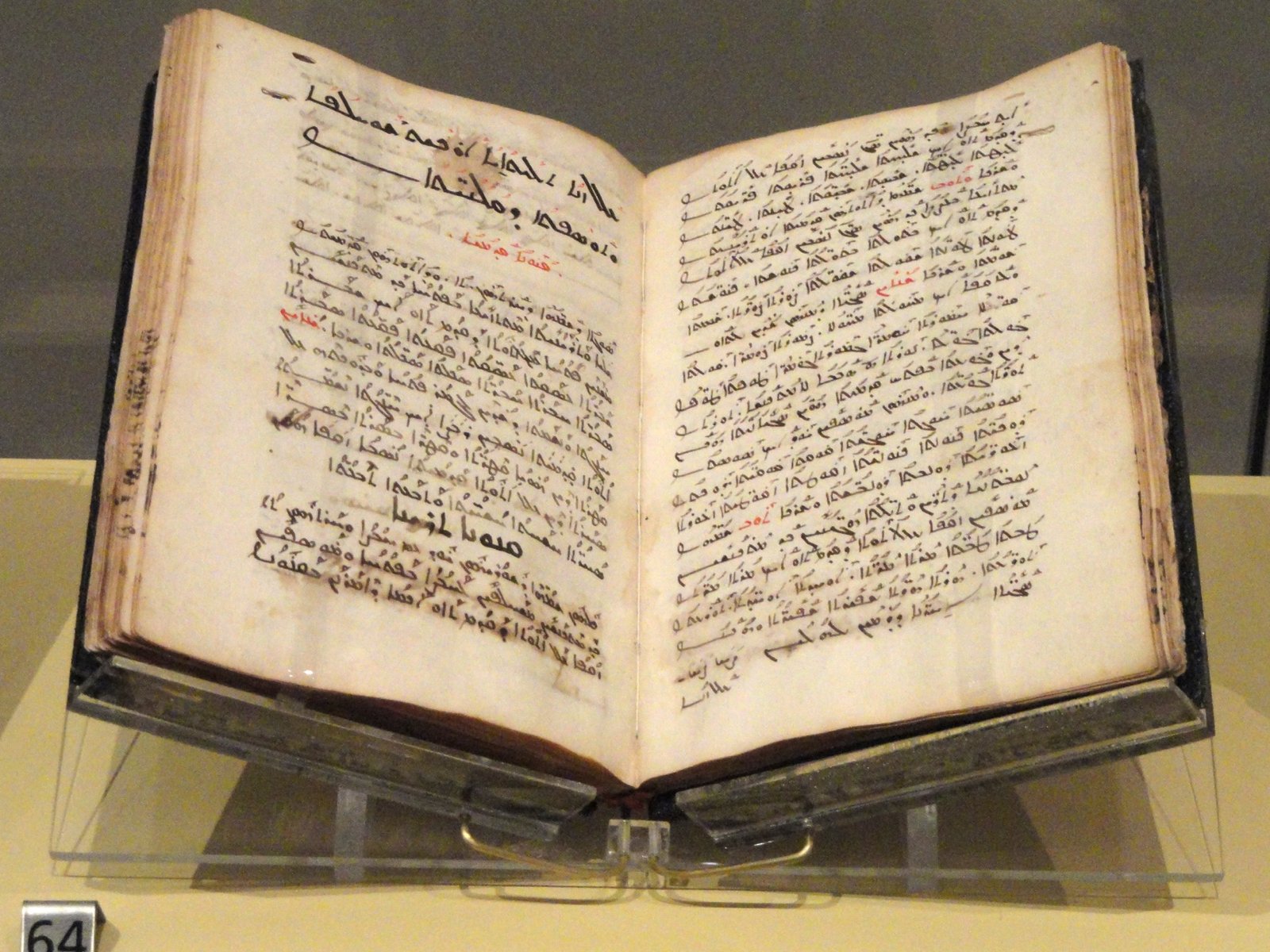
In English scholarship, Syriac usually names the classical Aramaic literary language associated with Edessa and the Christian traditions that used it. It also describes churches, manuscripts, liturgies and fields of study. Syriac is not the same as citizenship of the modern Syrian state, although the English words look similar and share a longer linguistic history.[9][10]
Suryoyo, Suraya and related endonyms are living community words with pronunciations and meanings that vary by dialect and region. Some people translate their identity as Syriac, some as Assyrian, and some use both in different contexts. An English website should not treat one translation as a secret correction of the other. It should report how a speaker or institution uses the term.[1][11]
Aramean
Ancient Arameans were associated with Iron Age peoples and polities across Syria and Mesopotamia. Aramaic languages spread far beyond those political units and were adopted by many populations, including within the Assyrian Empire. Speaking an Aramaic language today therefore cannot by itself prove one exclusive line of ancient ancestry.[9][12]
Aramean is also a sincere modern self-identification, especially among some West Syriac communities. Israel introduced a policy allowing eligible Christians to register as Aramean; that administrative decision was welcomed by some and contested by others. State recognition records a category and has real civic effects, but it does not settle the identity of Syriac-speaking communities elsewhere.[13][1]
Are “Syria” and “Assyria” the same word?
Major philological scholarship supports a historical relationship between Greek and related forms of Syria and Assyria, while the exact pathways and uses vary by source. Ancient geographical terminology could narrow or broaden over time. A writer must still ask what a specific author meant in a specific century rather than replacing every “Syrian” automatically with “Assyrian.”[14][15]
Etymology cannot dictate modern identity. Even if two words share an origin, that fact does not require every Syriac, Syrian, Assyrian or Aramean person to use the same label now. Nor can a spelling variant prove an unbroken political nation. Word history is evidence about language; self-identification is evidence about living communities.[1][15]
Church identity and ethnic identity
Churches preserved communal life, but their jurisdictions do not map neatly onto ethnic boundaries. The Assyrian Church of the East and Ancient Church of the East, Chaldean Catholic Church, Syriac Orthodox Church and Syriac Catholic Church have distinct histories. Members may share liturgical languages and family ties while choosing different public identities.[10][8]
Historic labels such as “Nestorian” and “Jacobite” were often applied from outside, reduce complex theology to disputed founders and can be offensive or misleading today. They belong in carefully explained historical quotations, not as default names for living people. Official church names and a person’s own terminology are better starting points.[10]
A practical guide for readers
When a person or organisation is specific, use its preferred name. When evidence includes several groups, name them rather than assuming one term is universally inclusive. When quoting a census or law, preserve its categories and explain their limitations. Avoid words such as “really,” “merely,” “fake” or “correct name” in contested contexts.[2][16]
A careful description can be precise without pretending disagreement does not exist: “Some members identify as Assyrian, others as Chaldean, Syriac/Suryoyo or Aramean, and some use composite identities.” That sentence does not solve every historical question. It creates space to examine the evidence without denying anyone’s living identity.[1][3]
Evidence trail
Sources and further reading
- Naures Atto. Hostages in the Homeland, Orphans in the Diaspora: Identity Discourses among the Assyrian/Syriac Elites in the European Diaspora. Leiden University Press, 2011.
- Alda Benjamen. Assyrians in Modern Iraq: Negotiating Political and Cultural Space. Cambridge University Press, 2022.
- Sargon George Donabed. Reforging a Forgotten History: Iraq and the Assyrians in the Twentieth Century. Edinburgh University Press, 2015.
- United States Census Bureau. ACS Ancestry Table B04006. data.census.gov, 2020.
Uses an aggregated Assyrian/Chaldean/Syriac ancestry category.
- Jonathan Valk. Ancient Assyrians: Identity and Society in Antiquity and Beyond. Cambridge University Press, 2025.
A study of Assyrian social categories that cautions against projecting modern identity models unchanged into antiquity.
- Adam H. Becker. Revival and Awakening: American Evangelical Missionaries in Iran and the Origins of Assyrian Nationalism. University of Chicago Press, 2015.
Emphasises missions, education, print and modern national formation in Iran.
- Eckart Frahm, ed.. A Companion to Assyria. Wiley-Blackwell, 2017.
Specialist chapters covering Assyrian history, language, cities, institutions and later reception.
- Catholic Near East Welfare Association. The Chaldean Catholic Church. Eastern Christian Churches.
- Holger Gzella. A Cultural History of Aramaic: From the Beginnings to the Advent of Islam. Brill, 2015.
- Aaron Michael Butts. Assyrian Christians. A Companion to Assyria, Wiley-Blackwell, 2017.
- Šlomo Surayt project. Surayt Aramaic Online Course. Erasmus+ language project.
- Silvie Zamazalová. Aramaic and Hebrew in Alphabetic Scripts. The Nimrud Project, ORACC.
- Knesset Research and Information Center. Arameans in the Middle East and Israel. Knesset.
Describes a contested administrative recognition policy in Israel.
- Richard N. Frye. Assyria and Syria: Synonyms. Journal of Near Eastern Studies 51(4), 1992.
- Robert Rollinger. The Terms “Assyria” and “Syria” Again. Journal of Near Eastern Studies 65(4), 2006.
- Arbella Bet-Shlimon. “Propaganda of the Victims”: Atrocity Denial, Ethnic Nationalism, and the Disparagement of Assyrians in Middle East Studies. Review of Middle East Studies, 2026.
A recent critical historiographical intervention; used with, not instead of, underlying historical sources.