In brief
The essential points
- The Assyrian state ended, but later settlement, names and cultic evidence contradict total demographic disappearance.
- Language shift from Akkadian to Aramaic began before the empire fell and does not require wholesale population replacement.
- The strongest synthesis is layered continuity: regional and demographic survival, changing traditions, and a modern identity shaped by later history.
Four different continuity questions
The phrase “Are modern Assyrians descended from ancient Assyrians?” compresses several questions. Did the imperial state continue? Did people remain in the heartland? Did names, languages, religious traditions and regional memories persist? When did a recognisably modern national identity develop? Evidence can answer each differently. Treating them as one yes-or-no test produces either an unchanged 2,600-year nation or total disappearance—neither is an adequate historical model.[1][2]
The state question is easiest: the monarchy and imperial administration were defeated by 609 BCE. Population continuity is also supported in broad terms. Cultural and identity continuity require finer distinctions because communities can change language, religion and political category without being replaced wholesale. Modern national consciousness, like other nationalisms, was reshaped by nineteenth- and twentieth-century institutions without emerging from nothing.[3][4]
What happened after 612 BCE?
Babylonian and Median armies captured major centres, but no contemporary source records a complete deportation or extermination of Assyria’s population. Post-imperial archaeology shows occupation at different sites, though palatial centres changed dramatically. Assyrian personal names appear in Babylonian and Achaemenid records, indicating people with regional or familial connections after the state’s fall.[3][5]
At Ashur, evidence suggests the cult of the god Aššur was restored under Persian rule and the city later flourished in the Parthian period. A restored cult does not by itself prove a continuous modern ethnicity, but it directly contradicts the image of a region without inhabitants or memory. Survival was local, uneven and embedded within new empires.[6][7]
Aramaic did not arrive after Assyria vanished
Aramaic was already spreading through the Neo-Assyrian Empire. Administrative scenes depict cuneiform and alphabetic scribes working together, and Aramaic offered a practical language across diverse populations. Akkadian remained prestigious in royal and scholarly settings. After 609 BCE, Aramaic continued its wider expansion while cuneiform learning persisted in Babylonian temples for centuries.[8][9]
A language shift is not automatically a population replacement. People can adopt a regional lingua franca across generations while keeping local ties, family histories and new forms of identity. Modern Neo-Aramaic languages are not direct descendants of Akkadian, and they should not be called “the ancient Assyrian language.” Their presence can nevertheless form part of a regional history shaped inside and after the Assyrian world.[9][10]
Late-antique northern Mesopotamia
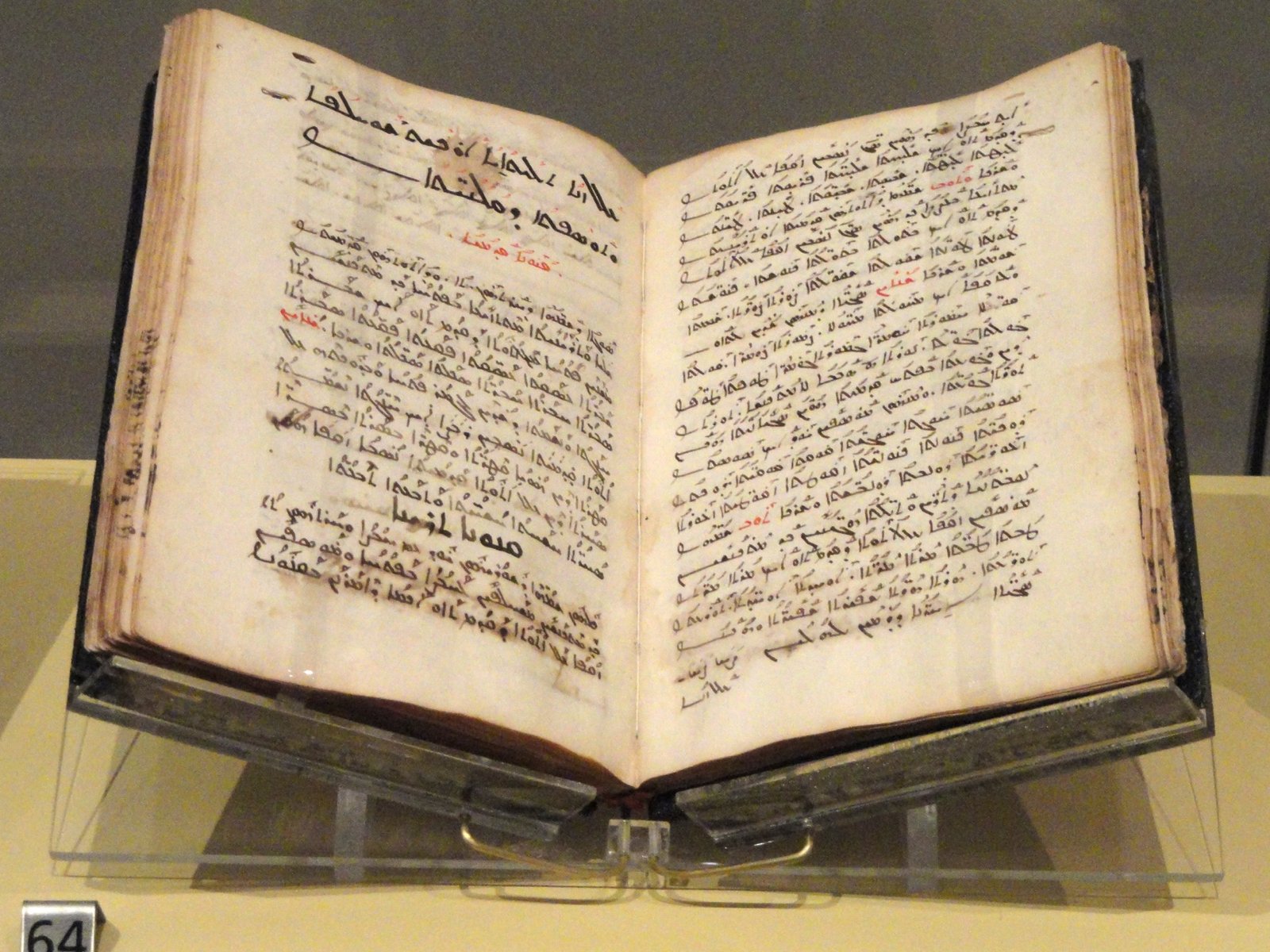
During the first centuries CE, Aramaic-speaking Christian cultures developed across Mesopotamia. Classical Syriac, associated with Edessa, became a major literary language. Churches later known as the Church of the East and Syriac Orthodox Church built institutions across changing Roman, Sasanian and Islamic worlds. Modern Assyrians inherit parts of these traditions through liturgy, manuscript culture, place and communal memory.[2][9]
Religious continuity is not a complete proof of ethnic continuity. Conversion can create new communities, and the meaning of regional terms changes across Greek, Latin, Syriac, Arabic and Persian sources. Yet late-antique Christian history should not be treated as an unrelated void between empire and modernity. It is one of the central historical layers through which present communities understand themselves.[2][11][12]
Modern identity formation is not fabrication
Nineteenth-century missions, schools, presses and archaeology changed public language. In Urmia, local authors and clergy helped turn vernacular Neo-Aramaic into a substantial print language. Western interest in ancient Assyria supplied new historical vocabulary, while Ottoman reform and global national movements opened political possibilities. Scholars who emphasise this period show how modern nationalism formed; they do not demonstrate that the people were invented from nothing.[4][13]
Community-centred research adds the agency of Assyrian writers, families, church institutions and organisers. They selected, resisted and transformed missionary categories. The catastrophes of Sayfo and Simele then made displacement, historical memory and claims to security central to national life. Identity formation was not one event or one foreign label but a prolonged negotiation under unequal conditions.[14][15][16]
What scholars disagree about
Strong-continuity accounts stress geographic survival, later uses of Assyrian-related names and cultural inheritance. Modernist accounts give greater weight to missions, archaeology and nationalism. Newer work often asks how identities change rather than demanding one timeless essence. Jonathan Valk’s study of ancient Assyrian social categories, for example, warns that the meaning of belonging shifted even within antiquity.[1][4][17]
These approaches can agree on more than polemics suggest. The empire fell. Northern Mesopotamian populations and settlements continued. Aramaic-speaking Christian traditions developed in the wider region. Modern national identity was reworked under modern conditions. Disagreement remains over which continuities deserve greatest emphasis and how historical names relate to present communities.[18][2]
What the evidence cannot decide
No document can provide a complete genealogical chain for every modern person. Genetics can investigate population relationships, but it cannot tell us what a historical group called itself, prove an unchanging nation or require someone to use a particular ethnonym. A DNA result is not a court of identity.[1]
Etymology also has limits. Scholarship supports a historical relationship between the terms Syria and Assyria in some languages and periods, but the path and meaning of any individual occurrence require context. Even a settled word origin could not determine whether a modern person must identify as Assyrian, Syriac or Aramean. Self-identification is evidence in its own right, not an error to be corrected by ancient philology.[11][12][15]
A careful conclusion: layered continuity
The evidence supports a layered account. There was demographic and settlement survival after imperial defeat; regional names and memories persisted in changing forms; Aramaic-speaking Christian cultures grew within the same broad northern Mesopotamian landscape; and modern Assyrians built national institutions from inherited traditions and modern encounters. No layer remained static, and no single source proves the whole chain.[3][5][2][14]
This conclusion rejects both erasure and overclaim. It does not describe all modern people as biologically identical to a seventh-century imperial elite. It also does not make state collapse into population extinction or modern development into invention. History is strongest when it explains transformation without demanding either perfect sameness or absolute rupture.[18][1]
Evidence trail
Sources and further reading
- Jonathan Valk. Ancient Assyrians: Identity and Society in Antiquity and Beyond. Cambridge University Press, 2025.
A study of Assyrian social categories that cautions against projecting modern identity models unchanged into antiquity.
- Aaron Michael Butts. Assyrian Christians. A Companion to Assyria, Wiley-Blackwell, 2017.
- Stefan R. Hauser. Post-Imperial Assyria. A Companion to Assyria, Wiley-Blackwell, 2017.
- Adam H. Becker. Revival and Awakening: American Evangelical Missionaries in Iran and the Origins of Assyrian Nationalism. University of Chicago Press, 2015.
Emphasises missions, education, print and modern national formation in Iran.
- Heather D. Baker. Assyrian Names. Personal Names in Cuneiform Texts from Babylonia (c. 750–100 BCE), Cambridge University Press, 2024.
Evidence for Assyrian names in post-imperial cuneiform records.
- Karen Radner. Assur’s “Second Temple Period”: The Restoration of the Cult of Aššur, c. 538 BC. Herrschaftslegitimation in vorderorientalischen Reichen der Eisenzeit, Mohr Siebeck, 2017.
Open-access study of cult and settlement after the fall of the empire.
- UNESCO World Heritage Centre. Ashur (Qal’at Sherqat). World Heritage List, 2003–.
Site history, significance and conservation status.
- Silvie Zamazalová. Aramaic and Hebrew in Alphabetic Scripts. The Nimrud Project, ORACC.
- Holger Gzella. A Cultural History of Aramaic: From the Beginnings to the Advent of Islam. Brill, 2015.
- Geoffrey Khan and project team. North-Eastern Neo-Aramaic Database Project. University of Cambridge.
Documented audio and linguistic data for North-Eastern Neo-Aramaic varieties.
- Richard N. Frye. Assyria and Syria: Synonyms. Journal of Near Eastern Studies 51(4), 1992.
- Robert Rollinger. The Terms “Assyria” and “Syria” Again. Journal of Near Eastern Studies 65(4), 2006.
- Heleen Murre-van den Berg. From a Spoken to a Written Language: The Introduction and Development of Literary Urmia Aramaic in the Nineteenth Century. Nederlands Instituut voor het Nabije Oosten, 1999.
- Alda Benjamen. Assyrians in Modern Iraq: Negotiating Political and Cultural Space. Cambridge University Press, 2022.
- Naures Atto. Hostages in the Homeland, Orphans in the Diaspora: Identity Discourses among the Assyrian/Syriac Elites in the European Diaspora. Leiden University Press, 2011.
- Sargon George Donabed. Reforging a Forgotten History: Iraq and the Assyrians in the Twentieth Century. Edinburgh University Press, 2015.
- John Joseph. The Modern Assyrians of the Middle East: Encounters with Western Christian Missions, Archaeologists, and Colonial Powers. Brill, 2000.
A modernist account whose arguments should be read alongside community-centred and newer scholarship.
- Arbella Bet-Shlimon. “Propaganda of the Victims”: Atrocity Denial, Ethnic Nationalism, and the Disparagement of Assyrians in Middle East Studies. Review of Middle East Studies, 2026.
A recent critical historiographical intervention; used with, not instead of, underlying historical sources.