Ancient city
Ashur
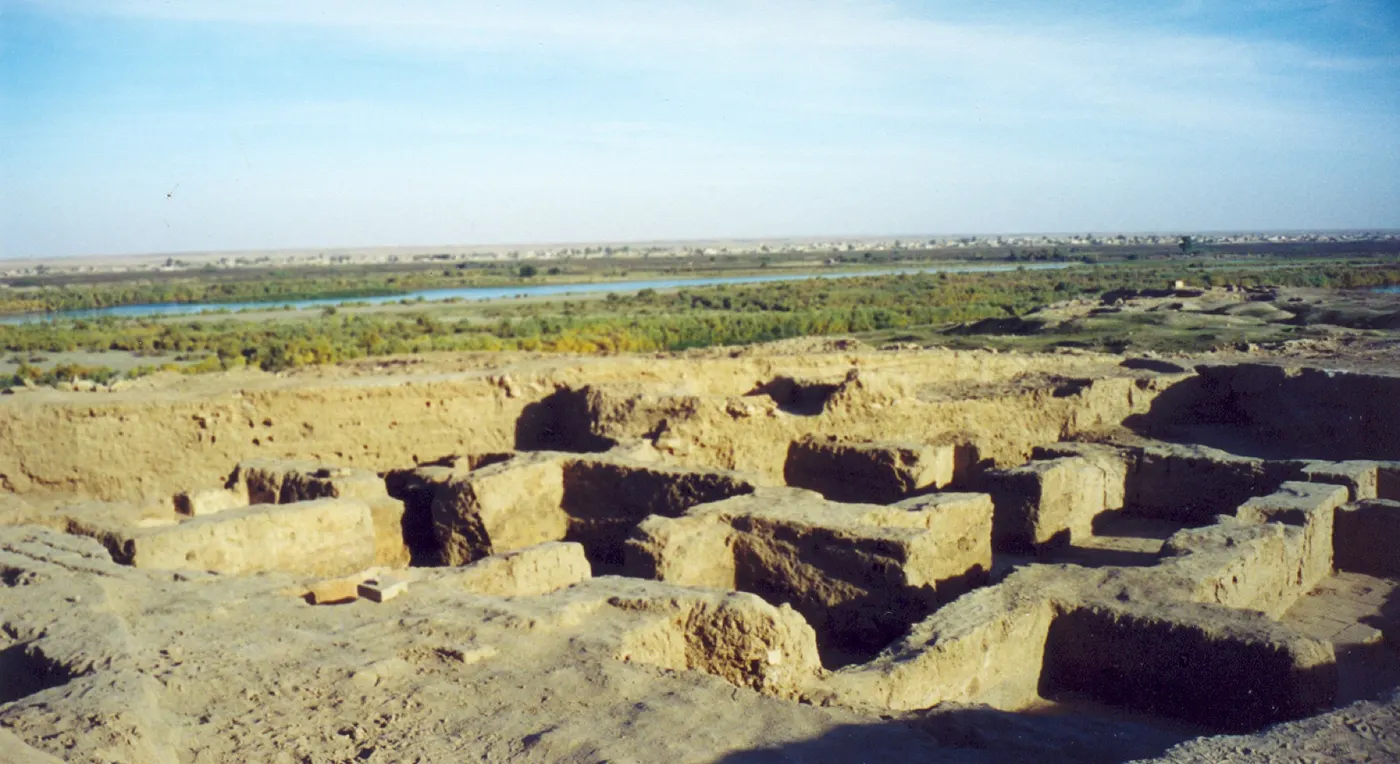
Assyria’s oldest political and sacred centre, set on a rocky terrace above the Tigris.
- Other names
- Aššur; Qal’at Sherqat
- Present-day location
- Salah al-Din Governorate, Iraq
- Reference coordinate
- 35.456, 43.261
Ancient and historical geography
Occupied by the third millennium BCE, Ashur became the centre of an Old Assyrian trading network and remained the symbolic heart of the kingdom even after royal courts moved elsewhere. The city and its principal god shared the name Ashur.
The place today
The archaeological site is known as Qal’at Sherqat in present-day Iraq. It was inscribed on UNESCO’s World Heritage List in 2003 and placed on the List of World Heritage in Danger because of threats including a proposed dam and conflict-related damage.
Layers of history
Ashur grew on a defensible terrace above the Tigris and was occupied across more than two millennia. In the Old Assyrian period it was the political and legal centre of merchant families active in Anatolia. Middle and Neo-Assyrian kings enlarged temples, walls and palaces even after royal residences moved to Kalhu, Dur-Sharrukin and Nineveh. The city’s sacred status survived those moves because the national god Aššur and the city shared a name.
People, institutions and daily life
Temples, houses, graves, archives and imported objects reveal a city that was never only a ceremonial capital. Merchants, priests, craft workers, officials, women managing households and people brought through imperial networks all shaped its history. In later periods, Parthian-era buildings and renewed worship show that settlement did not simply end with the fall of the Assyrian state.
Archaeology and open questions
German and Iraqi excavations exposed major architectural sequences, but early methods and the removal of objects complicate reconstruction. The modern site at Qal’at Sherqat is protected as UNESCO World Heritage in Danger. Erosion, looting, conflict damage and development pressures make documentation and local stewardship urgent. Archaeological boundaries describe a site; they do not define the borders of a modern ethnic homeland.