In brief
The essential points
- The Middle Assyrian period made Assyria a durable territorial great power rather than a merchant city-state.
- Provincial administration, agricultural estates, dependent labour and royal archives supported expansion.
- Royal inscriptions and law collections are essential but cannot be read as neutral campaign reports or proof of uniform legal practice.
From Mitanni’s shadow to great-power politics
During the fifteenth century BCE, Assyria operated in a northern Mesopotamian world strongly shaped by Mitanni. As that kingdom weakened under internal conflict and Hittite pressure, Ashur-uballit I asserted greater independence. His letters to Egypt claimed the status of a “great king,” and his intervention in Babylonian succession politics announced that Ashur now acted on an international scale.[1][3]
The change was gradual. Diplomatic recognition did not instantly create a stable empire, and absolute dates vary across chronological systems. Later kings such as Adad-nirari I and Shalmaneser I expanded west and north, defeated rivals and converted some conquests into provinces. The resulting state was not merely a rehearsal for the Neo-Assyrian Empire; it had its own institutions and political world.[1][6]
How a territorial state worked
Governors, district officials, military personnel and royal estates extended authority beyond Ashur. Administrative centres collected grain, animals, labour and information. Conquered landscapes were reorganised through settlement and agriculture as well as garrisons. The surviving archives show detailed management, but they are clustered at particular sites and decades, so no single model applies evenly across the kingdom.[2][1]
Royal power rested on households and obligations. Land could be tied to service; dependent workers and deported populations supported estates and construction; elites competed for office and access. This system generated resources while also producing coercion and vulnerability. “State” does not mean an impersonal modern bureaucracy: family, palace, temple and military networks overlapped.[2][6]
Law, gender and social hierarchy
The Middle Assyrian Laws are among the period’s most discussed texts. They address marriage, property, assault, sexual conduct, veiling and status through penalties that can be severe and strongly gendered. Yet the tablets form a scholarly legal collection rather than a surviving archive of courtroom verdicts. They show how learned officials organised legal possibilities, not how every dispute was decided in daily practice.[4][2]
Contracts and letters sometimes reveal negotiation that a law collection cannot. Women could own property and appear in economic records while remaining constrained by patriarchal household authority. Enslaved and dependent people are more visible as legal categories than as narrators of their own lives. The evidence therefore exposes inequality while also demanding caution about turning a normative text into a complete social photograph.[2][4]
Tukulti-Ninurta I and the imperial high point
Tukulti-Ninurta I defeated the Kassite king Kashtiliashu IV and carried Babylonian royal and cultic power into an Assyrian narrative of victory. His inscriptions and a literary epic cast war as a divinely judged conflict. Assyrian control of Babylonia was significant but unstable, and the later sequence is too compressed to support claims of effortless long-term rule.[3][1]
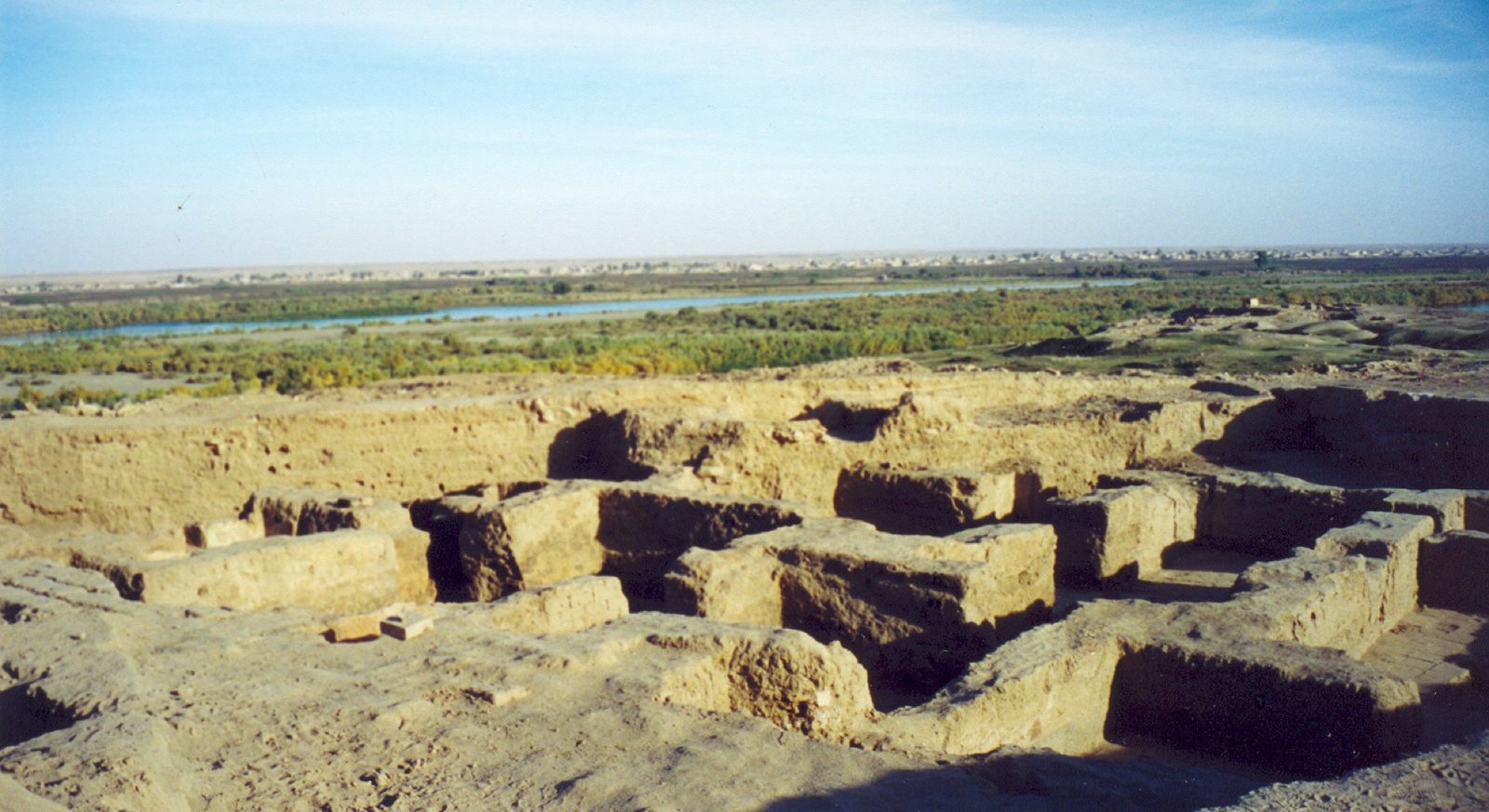
Across the Tigris from Ashur, the king founded Kar-Tukulti-Ninurta with palace terraces, a canal and a new temple of Aššur. The city may have concentrated court, cult and economic activity, but whether it was intended to replace Ashur entirely is debated. The king’s eventual assassination during a family conflict makes the foundation part of a wider argument about royal innovation and resistance.[5][3]
Crisis, contraction and Tiglath-Pileser I
After Tukulti-Ninurta, dynastic conflict and wider Late Bronze Age disruption reduced Assyrian reach. The kingdom survived when several neighbouring states disappeared, but survival did not mean uninterrupted expansion. Migrations, new political groups, economic strain and changing exchange networks reshaped the frontier. The record is uneven enough that one grand collapse theory would mislead.[1][6]
Tiglath-Pileser I later campaigned from Anatolia to the Mediterranean and restored major buildings at Ashur. His annals project enormous reach, yet much of it proved temporary. During the following centuries Assyrian authority contracted toward the core. The distinction between raid, tribute and governed territory is essential when reading the king’s geographic lists.[3][8]
What continued into the first millennium
The Neo-Assyrian recovery drew on older practices: provincial offices, royal itineraries, resettlement, agricultural development, military obligation and a long tradition of inscription. Continuity did not produce an identical state. First-millennium rulers worked in a different political environment and expanded administration to a far greater scale.[7][1]
Studying the Middle Assyrian period on its own terms prevents two distortions: treating it as a dark bridge between better-known eras, or projecting the seventh-century empire backward. Its archives make visible a formative experiment in territorial rule, together with the labour, law and violence on which that experiment depended.[2][6]
Evidence trail
Sources and further reading
- Stefan Jakob. The Middle Assyrian Period. A Companion to Assyria, Wiley-Blackwell, 2017.
- Stefan Jakob. Economy, Society, and Daily Life in the Middle Assyrian Period. A Companion to Assyria, Wiley-Blackwell, 2017.
- A. Kirk Grayson and project editors. Royal Inscriptions of Assyria online. Open Richly Annotated Cuneiform Corpus, University of Pennsylvania.
Scholarly editions and translations for Assyrian royal inscriptions through 745 BCE.
- ORACC project editors. Middle Assyrian Laws and Scholarly Tablets. Text Corpus of Middle Assyrian.
Editions of legal and scholarly texts; a collection of laws is not equivalent to a modern statutory code.
- ORACC project editors. Kar-Tukulti-Ninurta Text Corpus. Text Corpus of Middle Assyrian.
- Eckart Frahm, ed.. A Companion to Assyria. Wiley-Blackwell, 2017.
Specialist chapters covering Assyrian history, language, cities, institutions and later reception.
- Eckart Frahm. The Neo-Assyrian Period (ca. 1000–609 BCE). A Companion to Assyria, Wiley-Blackwell, 2017.
- Karen Radner. Ancient Assyria: A Very Short Introduction. Oxford University Press, 2015.
A concise scholarly synthesis of Assyrian geography, society and imperial history.