In brief
The essential points
- Old Assyrian trade was a family-based commercial network supported by institutions at Ashur, not a territorial empire in Anatolia.
- Merchants moved tin and textiles toward Anatolia and returned silver and gold, using credit, partnerships and written contracts.
- Thousands of private letters reveal women’s work, household negotiation and cross-cultural life—but the surviving archive is geographically uneven.
Ashur before empire
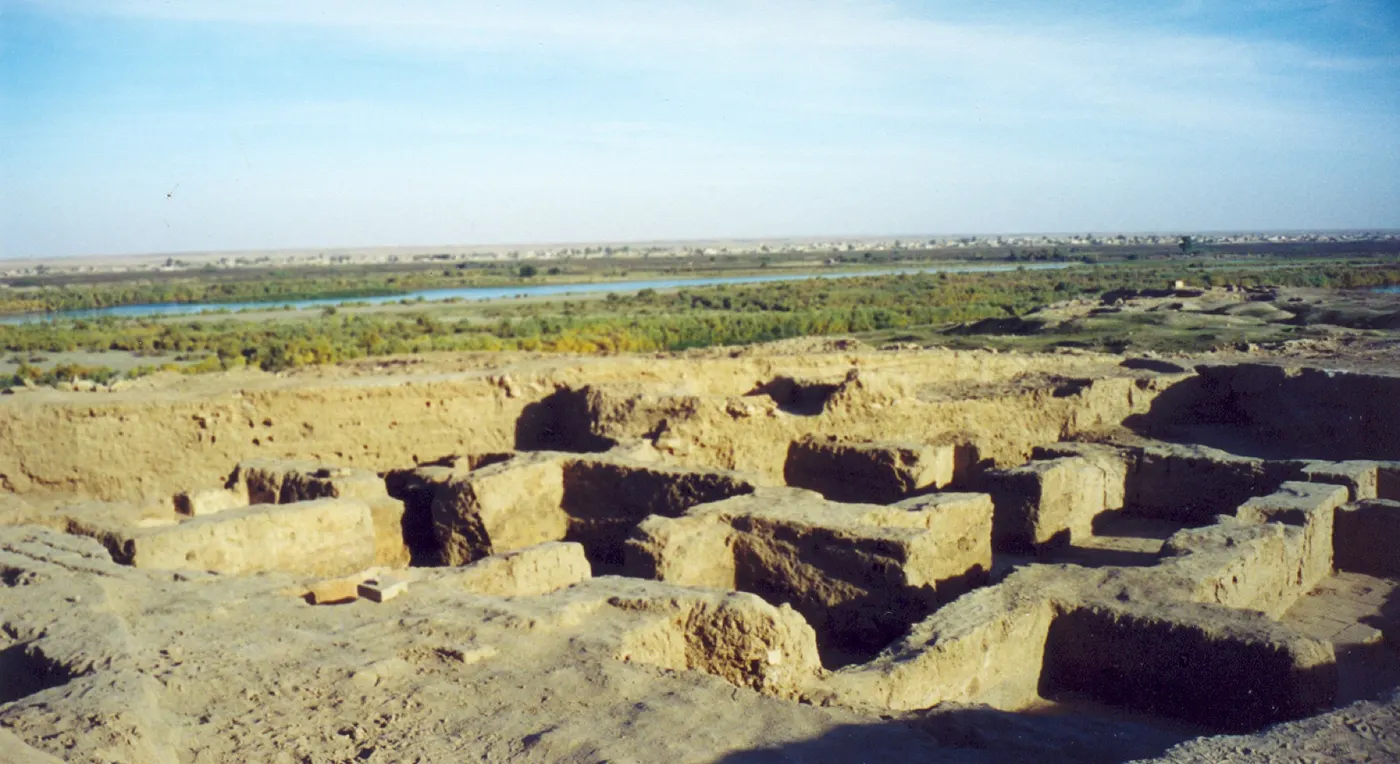
In the early second millennium BCE, Ashur was a compact city-state on the Tigris rather than the capital of a territorial empire. Its assembly, ruler, temples and merchant houses supported commerce over extraordinary distances. Traders retained legal and family ties to Ashur while living for years in Anatolian towns. Their activity shows that Assyrian history began with more than armies and kings: households, contracts and commercial reputation connected the city to a much wider world.[3][5]
Modern descriptions sometimes call the network an “Old Assyrian Empire,” but that phrase suggests political control the evidence does not show. Anatolian rulers governed their own cities, levied tolls and negotiated with merchants. Assyrians lived in recognised trading quarters called kārums and smaller stations, yet these were commercial communities inside local kingdoms. Power was negotiated through treaties, law, credit and access rather than annexed provinces.[2][1]
A thousand-kilometre route to Anatolia
Caravans carried tin and high-value textiles from Ashur toward Kaneš and other Anatolian markets. Tin had already travelled from farther east before Assyrian merchants handled it; the textiles included products made in Mesopotamia and imported from Babylonia. Donkeys moved loads through river valleys and mountain passes, facing tolls, weather, theft and political boundaries. Silver and sometimes gold flowed back toward Ashur as payment and profit.[2][3]
The lower town at Kaneš, modern Kültepe near Kayseri, became the best documented centre. It did not stand alone: letters name a web of Anatolian cities, routes and local palaces. Merchants could seek official help when roads were unsafe or rulers interfered with trade. Smuggling also appears, reminding us that ancient business worked around regulation as well as through it.[1][2]
Family firms, partners and credit
A commercial house divided work across generations and cities. Senior relatives in Ashur organised textiles, capital and correspondence; younger men travelled or managed Anatolian branches; agents handled particular consignments. Partnerships pooled investment and distributed risk. Loans, promissory notes, witnesses, seals and arbitration created enforceable expectations even when participants were weeks of travel apart.[3][1]
This sophistication tempts comparison with modern capitalism, but the analogy has limits. Household status, temple obligations, family law and political privilege shaped economic decisions. Silver served as a measure and means of payment without coinage, and debt relationships carried social as well as financial consequences. The safest conclusion is not that merchants invented a modern system, but that Bronze Age commerce developed complex institutions on its own terms.[5][3]
Women who produced, invested and wrote
Letters from Ashur make women unusually visible. Wives, mothers, sisters and daughters produced textiles, supervised households, sent goods, extended credit and pressed absent relatives to meet obligations. Textile work was skilled economic production, not incidental domestic labour. Some women controlled their own funds and negotiated family interests across distance.[4][1]
The archive also records strain. Long separation complicated marriages and inheritance. Some men formed households in Anatolia while wives remained in Ashur; contracts tried to regulate support and competing obligations. Women’s letters are therefore neither a simple story of liberation nor one of passivity. They document agency within legal and social structures that remained unequal.[4][3]
Assyrians and Anatolians at Kaneš
Kaneš was an Anatolian royal city with a multicultural lower town. Assyrian merchants rented or owned houses, married locally, used both Assyrian and Anatolian personal networks and adapted to palace authority. Seals, objects and language show exchange without erasing difference. “Assyrian” in these documents could identify origin, legal affiliation and community membership in ways that do not map neatly onto a modern passport or ethnicity box.[2][1]
Most tablets were practical documents written in an Old Assyrian dialect of Akkadian using cuneiform. Literacy was specialised but deeply embedded in commerce: a short letter might carry instructions, accusation, affection and calculation at once. Scribes and merchants used standard formulas while preserving individual voices. These private archives reveal an ancient society from inside its arguments.[1][6]
Why the archive survived—and what it leaves out
Destructive fires baked clay tablets that otherwise might have dissolved. Archaeologists recovered archives from merchant houses in distinct occupation levels, allowing families and transactions to be reconstructed. UNESCO’s Memory of the World recognition applies to this documentary archive. The archaeological site has a different heritage status and a much longer Anatolian history.[1]
The network contracted as political conditions changed in Anatolia and northern Mesopotamia. The archive ends more clearly than the commercial habits it records, which continued in altered forms. Because Kaneš preserves tens of thousands of documents while contemporary Ashur is less fully documented, historians must resist treating one settlement as the whole network. Exceptional survival is evidence and bias at the same time.[3][2]
Evidence trail
Sources and further reading
- UNESCO Memory of the World. The Old Assyrian Merchant Archives of Kültepe. UNESCO.
Overview of the merchant archive from ancient Kanesh.
- Metropolitan Museum of Art. The Old Assyrian Period (ca. 2000–1600 B.C.). Heilbrunn Timeline of Art History.
- Klaas R. Veenhof. The Old Assyrian Period. A Companion to Assyria, Wiley-Blackwell, 2017.
- Cécile Michel. Women of Assur and Kanesh: Texts from the Archives of Assyrian Merchants. CDLI publication record, 2020.
Research on women’s economic, household and written activity in Old Assyrian archives.
- Karen Radner. Ancient Assyria: A Very Short Introduction. Oxford University Press, 2015.
A concise scholarly synthesis of Assyrian geography, society and imperial history.
- Eckart Frahm, ed.. A Companion to Assyria. Wiley-Blackwell, 2017.
Specialist chapters covering Assyrian history, language, cities, institutions and later reception.