Neo-Assyrian ruler
Ashurbanipal
The last great king of Assyria, known for campaigns, court art and the scholarly tablet collections recovered from Nineveh.
- Approximate reign
- 668–c. 631 BCE
- Family / dynasty
- Sargonid dynasty
Major events
- Defeated an Elamite kingdom and represented the victory in palace reliefs
- Fought a civil war against his brother Shamash-shumu-ukin of Babylon
- Assembled and inherited large scholarly tablet collections
Building and royal display
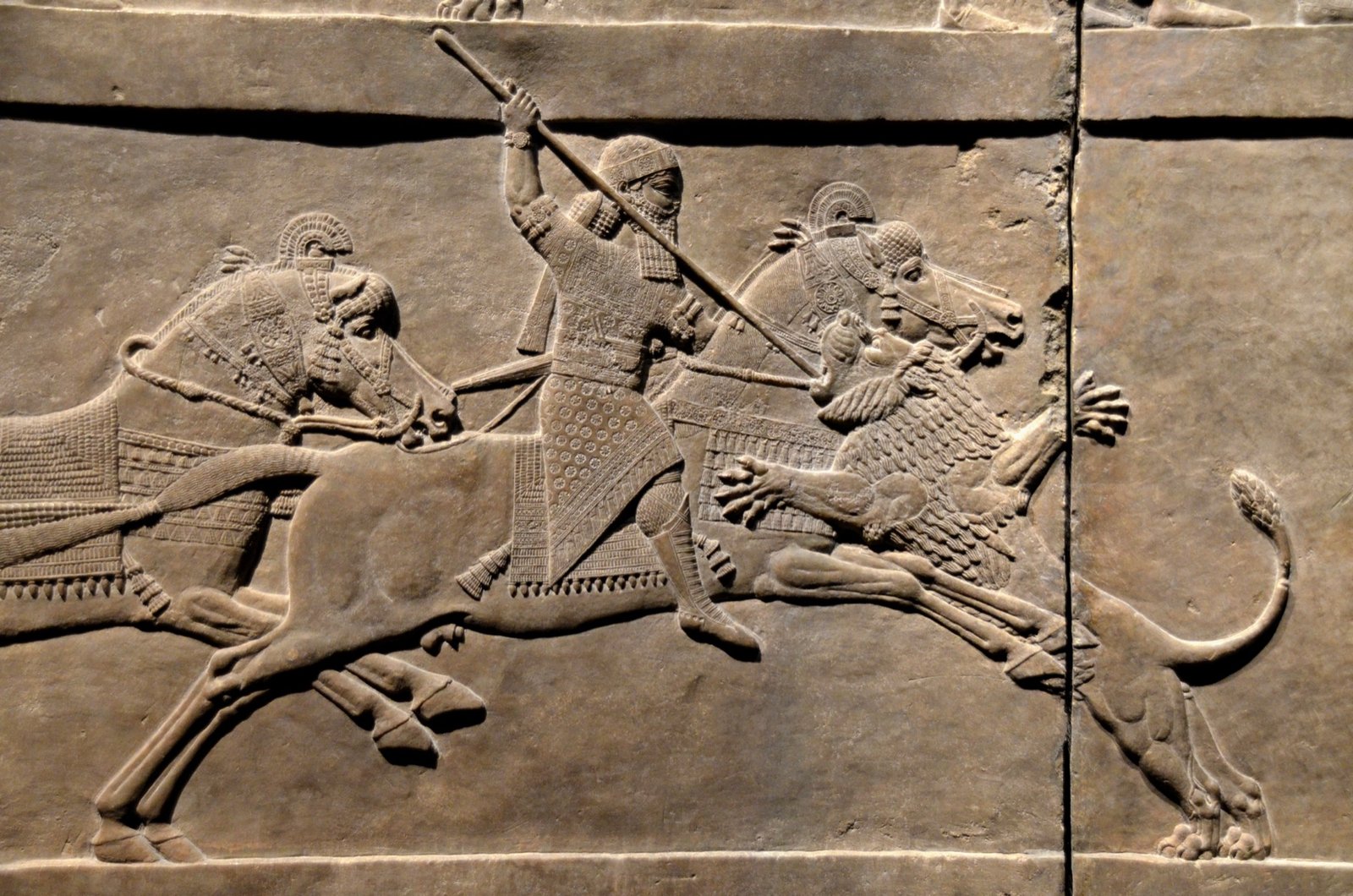
Expanded and redecorated palaces at Nineveh; the North Palace reliefs include lion hunts and wars in Elam and Babylonia.
Historical significance
The tablets associated with his libraries preserved works central to modern knowledge of Mesopotamian literature, scholarship, ritual and administration.
The reign in context
Ashurbanipal came to the Assyrian throne under the succession plan devised by Esarhaddon. Royal texts emphasise his scholarly education as well as martial ability, an unusual combination in royal self-presentation. The empire initially remained powerful, but the reign was dominated by conflicts in Egypt, Elam and Babylonia and by a civil war with his brother.
Rule beyond the headline
The defeat of Shamash-shumu-ukin after a long Babylonian rebellion and campaigns against Elam were represented in some of the most intricate surviving palace reliefs. They should be read as choreographed court narratives, not battlefield photographs. At Nineveh, scholars collected, copied and organised tablets for royal use. The resulting deposits preserve literature, medicine, ritual, divination and lexical learning from many periods.
Evidence and interpretation
“Library of Ashurbanipal” is a convenient modern label for tablets from several rooms, buildings and collecting histories. Colophons and letters reveal active acquisition, yet not every tablet was commissioned by the king. The last years of the reign are poorly documented and his death date is debated. That gap matters because the empire’s final crisis followed soon afterward, without being reducible to the personality of one ruler.