Ancient city
Dur-Sharrukin / Khorsabad
Sargon II’s purpose-built capital, occupied by the royal court only briefly before his death.
- Other names
- Dūr-Šarrukīn; Khorsabad
- Present-day location
- Nineveh Governorate, Iraq
- Reference coordinate
- 36.510, 43.229
Ancient and historical geography
Founded late in the eighth century BCE, “Fortress of Sargon” was laid out with massive walls, a palace platform, temples and monumental gates. Construction was still incomplete when Sargon died in 705 BCE.
The place today
The site is beside the village historically called Khorsabad, north-east of Mosul. Sculptures excavated there entered collections in Baghdad, Paris and Chicago; work at the site has also faced looting and conflict damage.
Layers of history
Sargon II founded Dur-Sharrukin—“Fortress of Sargon”—late in the eighth century BCE. Its near-rectangular enclosure, elevated palace complex, temples and monumental gates formed a purpose-built statement of a new dynasty. The project drew labour, materials and artistic traditions from across the empire, embedding imperial relationships in the construction process.
People, institutions and daily life
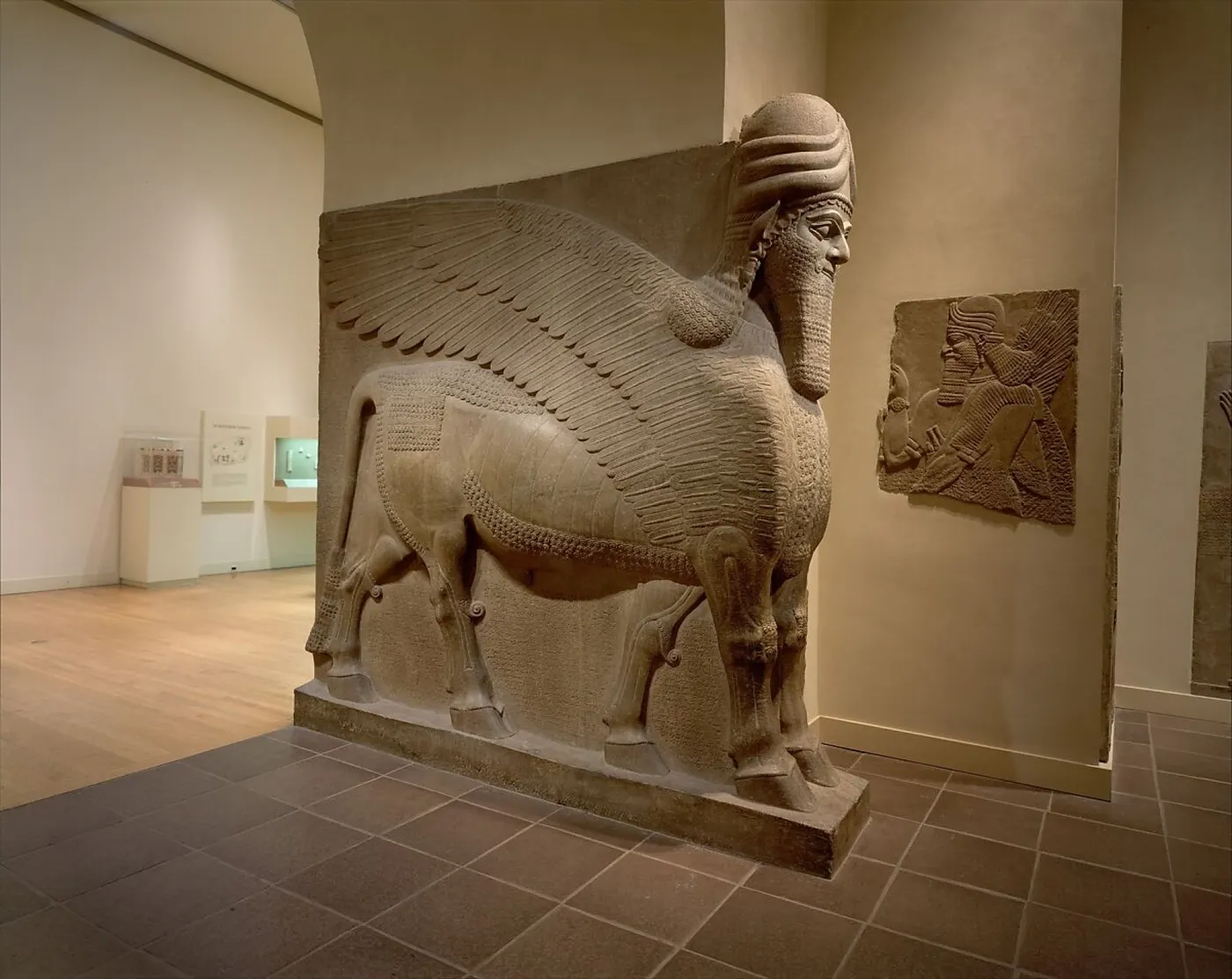
Colossal lamassu guarded key thresholds, while reliefs organised courtiers, tribute and campaigns into a controlled route through the palace. Houses and administrative buildings show that the enclosure was more than a theatrical shell, although the intended population was probably never reached. When Sargon died in 705 BCE, the court moved to Nineveh and construction slowed, but activity continued at the site.
Archaeology and open questions
French excavations at Khorsabad in the nineteenth century were foundational for Assyriology, yet transport losses and incomplete early records scattered the evidence. Later work refined the plan and studied construction techniques. Looting and conflict have caused further damage. Calling Dur-Sharrukin a “failed capital” captures its brief royal use but can obscure what the completed spaces reveal about planning, labour and Sargonid political imagination.