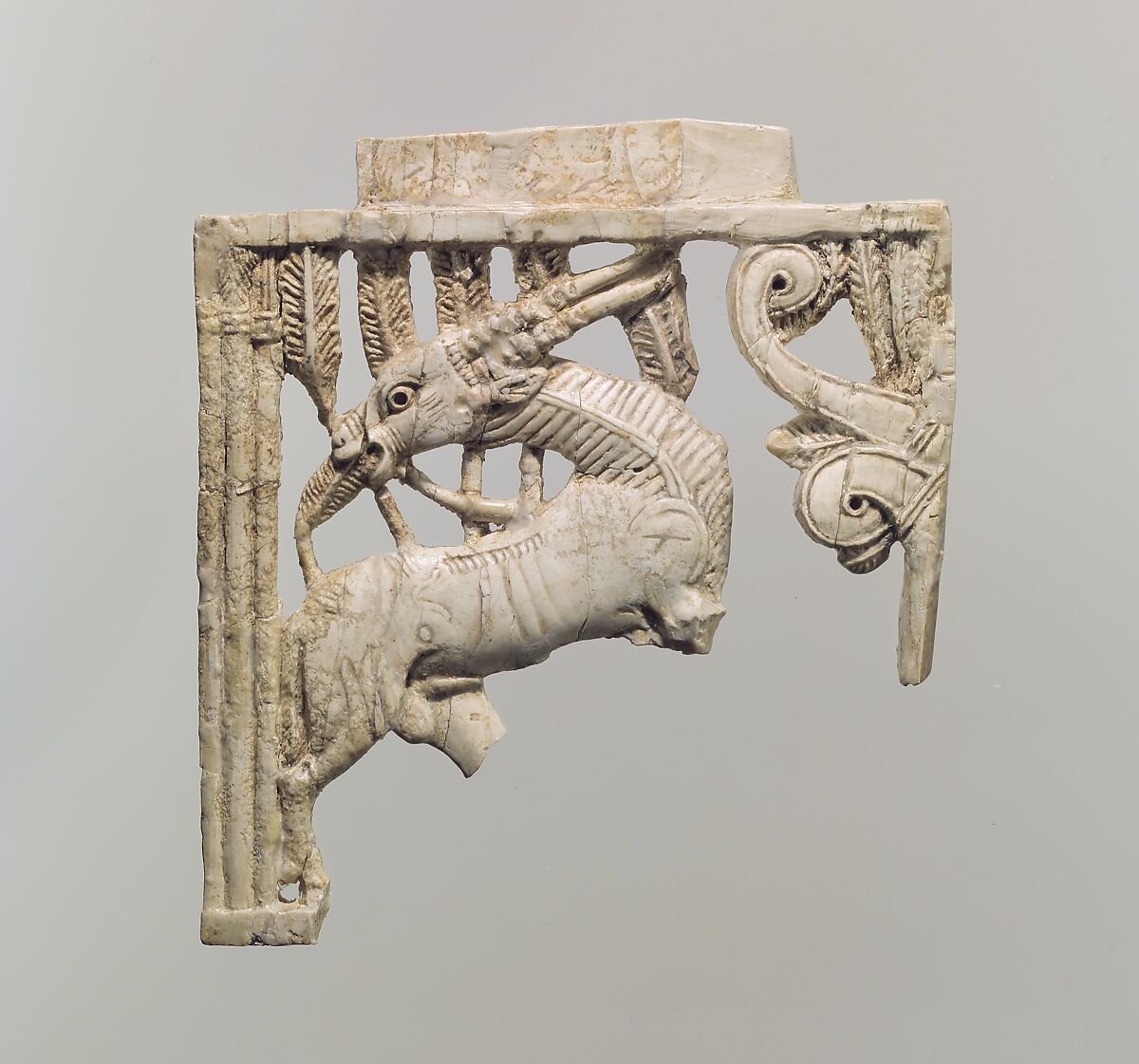
An animal within a carved framework
A grazing oryx occupies a delicate arrangement of stylized plants. Openwork carving removes parts of the ivory, making gaps integral to the design. The museum identifies the piece as a furniture plaque and dates it broadly to the ninth or eighth century BCE. Its small size and material distinguish it from the monumental palace reliefs, even though both kinds of objects could contribute to an elite environment.[1]
A stylistic question remains open
The catalogue associates the openwork technique with Phoenician ivory carving but also points to parallels with stone sculpture from Tell Halaf in northern Syria. It therefore presents a discussion about artistic tradition rather than one certain named workshop. The museum’s geography identifies Nimrud as the site associated with the object. That does not automatically settle where the carver worked, which language the maker spoke or every stage through which the plaque reached a palace collection.[1]
Compare form without inventing an owner
Follow the animal’s outline and the fronds before deciding which parts are structural and which are decorative. Compare this accession, 58.31.3, with another ivory rather than treating every furniture fitting from an Assyrian setting as the same object. The surviving plaque does not identify the original chair, couch or particular royal owner by itself. Nor should it be placed in a queen’s burial merely because other costly objects were excavated at Nimrud. Its value lies partly in these distinctions: the animal is visible, the catalogue identity is known, and some questions about production and use remain research problems.[1]
Sources for this object
- The Metropolitan Museum of Art. Openwork furniture plaque with a grazing oryx in a forest of fronds, 58.31.3.
Catalogue identity, material, date, Nimrud geography, openwork technique and debated artistic tradition; Public Domain image indicated.